Informative YouTube Channel

https://youtu.be/axUQbaEoQ8w

A newer YouTube channel has been created! The YouTube channel for the Legacy Healthcare Careers Nursing Assistant School can be accessed by clicking here

Legacy Healthcare Careers’ very own YouTube channel contains a host of informative videos on different topics that pertain specifically to nursing assistants and aspiring CNAs. Some of these topics include the CNA state test, hands-on skills for nurse aides, written practice questions with answers, dress codes, and additional information that nursing assistants might be able to utilize in their daily practice as healthcare clinicians.

In summary, if you are an experienced CNA, current nurse aide student, direct care worker, caregiver, or perhaps just entertaining the idea of becoming a nursing assistant one day in the distant future, you may wish to visit our channel on YouTube to see if the assorted pearls of wisdom found within the short videos may be of benefit to you.

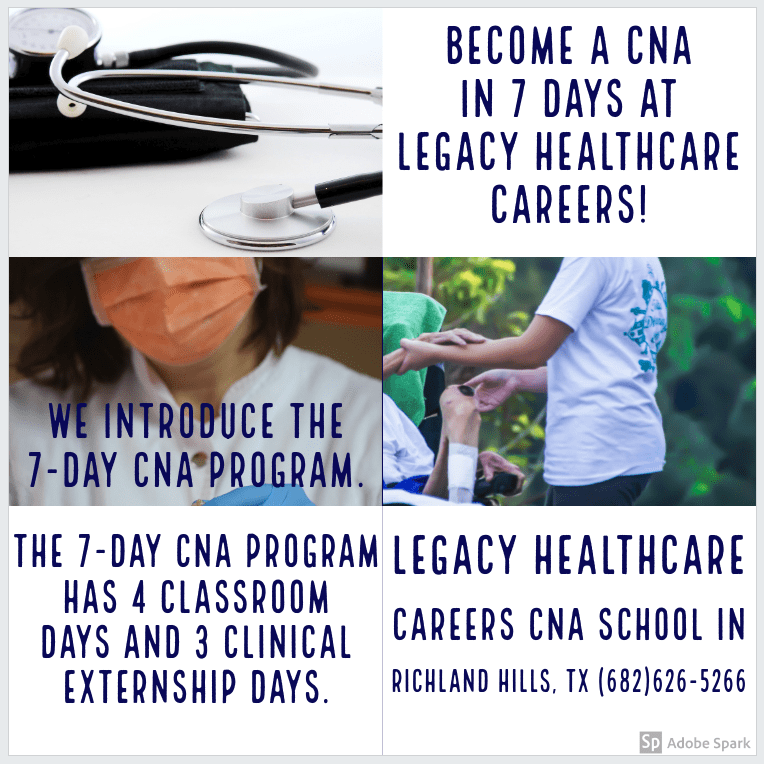
As always, prospective students in the Dallas-Fort Worth area of Texas should contact Legacy Healthcare Careers Nursing Assistant School to obtain quality, fast-track, affordable nurse aide training in as little as 7 days. Yes, you did read that last blurb correctly: Legacy Healthcare Careers offers a unique 1-week CNA program that could help you transition into a new healthcare career as a nursing assistant in just 7 days.

In the very near future, Legacy Healthcare Careers will also offer a brand new certified medication aide training program to prospective students in the Dallas-Fort Worth metro area. The staff of Legacy Healthcare Careers is in the beginning phases of adhering to the multiple regulatory steps associated with the addition of the medication aide classes to the school’s current course offerings. More details will be added as the development of the certified medication aide training program reaches completion time.

Call (682)626-5266 to schedule an appointment time to enroll or visit the school’s website to submit an online application for enrollment at www.LegacyHealthcareCareers.com.

 

Top Questions You Must Ask Of Any Nursing Assistant Training Program

books classroom close up college
Photo by Pixabay on Pexels.com

To communicate this message in the most straightforward manner possible, not all certified nursing assistant (CNA) training programs are created equally. First of all, some CNA programs are offered at community colleges whereas other classes are taught at private schools or nonprofit organizations. Second of all, differing schools can charge drastically different tuition and fees for what is essentially the same CNA training.

Thirdly, some schools offer ongoing support services after students graduate from the nursing assistant training program while other schools offer absolutely nothing whatsoever. Ongoing support for nursing assistant graduates that some schools offer can be in the form of job placement assistance, CNA state test preparation courses post-graduation, provision of recommendation letters to other schools and employers, and help with writing résumés and cover letters.

Without further ado, the following is a compilation of questions that prospective students may wish to ask of any nursing assistant training programs they are considering attending.

  1. Is the CNA program approved? Nurse aide training programs must be approved to operate in the state where the school is located. If the nurse aide training program is not approved, graduates will typically not qualify to sit for the CNA state test.
  2. How long does the CNA program take to complete? Some programs take a week or two to complete, whereas other programs drag it out over the duration of an 16-week entire semester.
  3.  Does this program offer job placement assistance? Some nurse aide training programs offer job placement assistance to graduates, which is an immensely helpful service.
  4. Is the CNA program taught by nurses? Most states require nurse aide training programs to be taught by licensed nurses. Some CNA programs employ registered nurses (RNs) to teach all classes, whereas other programs utilize licensed practical/ vocational nurses (LPNs/ LVNs) to provide all the instruction. RNs tend to have more years of clinical and theoretical education than LPNs/ LVNs.
  5. Does the school offer help with passing the CNA state test? Some programs provide ongoing support to help graduates of the CNA training program pass the CNA state test. This is a fabulously helpful service that comes in handy to graduates who need extra help.
  6. What is the average class size? Some schools offer smaller class sizes of less than 10 pupils per class. Other CNA programs can have up to 20+ students attending nurse aide classes together. In general, smaller class sizes can translate into a higher level of individualized attention and more time for questions.

The nursing assistant training programs at Legacy Healthcare Careers CNA School are fully approved to operate by the Texas Workforce Commission (TWC) and the state Department of Aging and Disability (DADS). In addition, Legacy Healthcare Careers offers job placement assistance to graduates, preparation for the CNA state test, and small class sizes that promote individualized attention to all students.

Moreover, all classes offered at Legacy Healthcare Careers are taught by RNs with many years of combined clinical experience. The tuition and fees for the CNA classes are affordable; additionally, the school offers a highly innovative 7-day course of study that enables students to become nursing assistants in only one week. Call (682)626-5266 to enroll or visit the school’s website at www.LegacyHealthcareCareers.com for more information.

Screenshot 2018-12-14 at 9.59.52 AM

Texas CNA Skills (Part Eleven): Pearls of Wisdom from Nurse Aides Who’ve Passed the CNA State Examination

Screenshot 2018-12-20 at 12.17.03 AM

Due to legislation that had been enacted and implemented in the late 1980s, nurse aides must obtain state certification as certified nursing assistants (CNAs) if they want to secure employment in certain healthcare facilities that accept federal dollars. The Omnibus Budget Reconciliation Act of 1987, more simply known as OBRA, established the minimum acceptable standards for nurse aide training.

The overarching goal of nurse aide training programs is to sufficiently prepare students in nursing assistant programs with the practical knowledge, clinical skills, and procedures that must be adhered to by members of staff at all skilled nursing facilities that receive federal payments. In simpler wording, OBRA is the very reason that nurse aides must attain CNA certification if they want to work at these types of workplaces.

So, this is the burning question. How in the world does a nurse aide obtain certification as a CNA? The answer to this question is the following: a nurse aide becomes certified in a particular state by passing the national CNA state exam utilized by that state. A wonderful way to become more familiar and confident with the setup of the CNA state exam is to obtain feedback from nurse aides who have taken and passed the test.

The following responses are from multiple nurse aides who possess firsthand experience in regards to taking the CNA state exam. The responses provided by these nurse aides pertain mainly to the successful completion of the skills section of the CNA state exam. Keep in mind that a written (or oral) section of the CNA state exam exists as well.

The individual and collective insights provided by these nurse aides that pertain to the CNA state test are rather enlightening. In addition, readers can learn quite a bit of new information from the varied perceptions and recollections of these nurse aides’ different experiences with the CNA state exam. Therefore, read and pay close attention to recurrent themes within the responses such as the importance of performing the procedural skills using the correct sequence of steps.

NURSE AIDE ONE: “If you mess up on a step or just forget to complete a step, you will simply lose points. If you forget to do a bold step (also known as a critical element step), or perform it wrongly, you fail the entire skill by default. You should be able to pass the CNA state test as long as you remember to perform the bold steps and always do them right.”

NURSE AIDE TWO: “You will need to do the skills in the exact order on the skills handbook or you will not pass. So, in your spare time, practice on other people or dolls until you have each step memorized. If you can memorize each and every move, you will pass your CNA state test with flying colors.”

NURSE AIDE THREE: “Where I live, the person who watches you do the skills on the CNA state test is looking for you to perform the tasks in the order listed on the handbook. If you perform the tasks out of order, but do them right, points get deducted from the total score.”

NURSE AIDE FOUR: “On the CNA state test I did the steps as I had learned them since I knew I would have forgotten to do something really important if I strayed from what I learned. All the steps are there for a reason. So I suggest you instill them into your memory bank as best as you can.”

NURSE AIDE FIVE: “Do all the steps in the exact order for the skills.”

NURSE AIDE SIX: “I took lessons for CNA and each time when I took the skills exam part of the CNA state test, we needed to complete every skill correctly step by step. It is because these steps were placed and organized the right way so as to cut down on the chances of cross contamination and to teach you the best way to do the skills for the best care of the residents.”

Texas CNA Skills (Part Five): Charting & Documentation for the CNA State Test and Beyond

people in front of macbook pro
Photo by rawpixel.com on Pexels.com

Documentation is one of multiple vital tasks that the overwhelming majority of certified nursing assistants (CNAs) are entrusted with completing. After all, many prospective nursing students and nurse aides have heard the olden adage that “if it was not documented, it was not done.” Also, any documentation completed by the nurse aide eventually ends up as a permanent part of patients’ medical records. Patients deserve accurate, complete medical records.

Since nursing assistants perform many care tasks and procedures throughout the course of a typical work shift, it would make sense that these tasks will need to be charted accurately. A correct way of documentation exists for CNAs and other healthcare workers in the medical field. On the other hand, a number of incorrect methods of documentation also exist.

Since documentation is such a vital task, it is of the utmost significance for nursing assistants to know how to complete this duty the right way and in a timely manner. In addition, nurse aide test takers who want to pass the CNA state test for certification as a certified nursing assistant will need to know how to chart their various findings and care in a proper manner in order to be successful on the skills section of the exam.

During the CNA state test, documentation is a task that the nurse aide candidate will need to complete at the testing center in front of the examiner for evaluative purposes. The skills section of the Texas CNA state test requires the nurse aide test taker to be tested on five testable skills that are selected randomly.

The nurse aide will need to perform the five aforementioned randomly selected skills step by step in front of the examiner. The nurse aide must achieve a passing cut score on a minimum of four out of the five procedural skills in order to pass the skills evaluation section of the CNA state test.

Also, most of these procedural skills will call upon the test taker to chart or document his or her findings after completion of the procedure. For example, the procedural skill of measuring a patient’s respiration rate must be documented during the skills portion of the CNA state test. Therefore, the testing site examiner will be eyeballing the nurse aide test taker’s charting for accuracy and completeness.

If the documentation step of the procedural skill is not deemed to be accurate by the testing site examiner, the test taker will fail on this skill. For instance, the nurse aide test taker will fail the skill of measuring and recording respirations if he or she documents a respiration rate of 20 breaths per minute when the examiner records a respiratory rate of 16 breaths per minute. In the eyes of the examiner, the charting was inaccurate, so the test taking candidate fails the skill.

Screenshot 2018-12-02 at 4.18.55 PM

Nursing assistants chart their findings based on a combination of observations as well as verbal reports from patients and families. Moreover, these findings can be either objective or subjective in nature. Objective findings are ones that the nursing assistant is able to utilize their senses to hear, see, smell and touch. Objective findings can be proven and measured or directly observed, whereas subjective findings cannot be proven or observed because they are merely what the patient or family member has reported to the nursing assistant.

Objective findings are measurable and/or based in provable fact, such as a blood pressure reading of 118/62 mmHg or urine that is clear and light yellow in coloration. Subjective findings cannot be proven or directly observed by the nurse aide, such as a patient reporting that he has a toothache or a family member reporting that her elderly mother passed out near the bed prior to lunchtime.

To recap, objective findings are clearly based on numerical metrics that can be measured. A heart rate of 72 beats per minute is an objective finding because it is obviously measurable. Objective findings are also based on observable data utilizing the nurse aide’s sense of smell, touch, sight and sound. Therefore, a finding of a patient’s skin that is warm and dry to touch also would be objective data since the nurse aide used his or her sense of touch to come up with that finding.

On the other hand, subjective findings include all data that cannot be measured or verified by the nurse aide’s various senses. If a patient tells nursing members of staff that he slipped and fell in a puddle of orange juice near the dining area after breakfast, this is subjective data because the nurse aide did not see the fall and cannot prove it even took place through his or her sense of sight. If a patient says, “My tummy hurts,” this is a subjective finding because the patient is telling the nurse aide what his pain is.

Pain is subjective because it is a feeling that cannot be measured or observed, and even though a facial grimace can be observable, keep in mind that many patients grimace for reasons other than the unpleasant sensations associated with being in pain. So, anything the patient or her family tells the nurse aide is subjective if he or she did not observe it as it supposedly happened or cannot possibly measure it in any meaningful way.

The following list contains a handful of general guidelines for charting and documenting related to the nurse aide role during the CNA state test, as well as beyond (read: the workplace).

  1. The nursing assistant should utilize the correct chart, paperwork, or ADL form.
  2. The nursing assistant should always avoid the use of felt tipped markers when recording findings in the medical record.
  3. The nursing assistant must bring three sharpened no. 2 pencils to the testing center to take the CNA state test.
  4. The nursing assistant must record all vital signs in the appropriate sections on the paperwork provided.
  5. The nursing assistant should correct mistakes by crossing them out with one line. The nursing assistant should proceed to write his or her initials next to the error.
  6. The nursing assistant must write his or her initials next to all skills that he or she has performed.
  7. The nursing assistant must record all intake and output findings in cc or mL increments and percentages (e.g., 50% of meal was consumed; 750mL of urine output obtained, etc.).
  8. The nursing assistant should document that he or she notified the nurse of any abnormal patient findings or observations.
  9. The nursing assistant should utilize only approved abbreviations and terms when charting.
  10. The nursing assistant should chart subjective findings utilizing quotation marks as stated by the patient (e.g., patient states, “I have a really throbbing headache.”).
  11. The nursing assistant should avoid charting procedures and care that has not yet been provided. The nursing assistant should not record any care before it has actually been delivered.
  12. The nursing assistant should initial the bottom of the paperwork. The nursing assistant must sign the bottom of the document with his or her first name, last name, and title (N.A.). The nursing assistant must date the document.

https://youtu.be/Em5PwX_C1UQ

REFERENCES

Brit2829537. (n.d.). I went into nursing for the charting (image). Retrieved from https://www.someecards.com/usercards/viewcard/i-went-into-nursing-for-the-charting-said-no-nurse-ever–9f173/?tagSlug=workplace


Texas CNA Skills (Part Three): Measuring and Recording Respirations

Screenshot 2018-12-01 at 12.22.36 PMRespiration, also known as breathing, is one of the four main vital signs that nursing assistants, nurses, respiratory therapists, paramedics, emergency medical technicians and other healthcare workers must know how to accurately obtain and record. Of course, the other three vital signs include temperature, pulse and blood pressure.


Alternately worded, a patient’s respiratory rate is his or her breathing rate. It is the number of breaths that he or she takes over the course of one full minute (60 seconds). Generally, a respiration rate that falls between 12 and 20 breaths over the course of one whole minute is considered a normal and expected finding in an adult who is resting.

Remember the concept in this manner for enhanced ease of recollection and lack of confusion: the process of respiration is more commonly known as the process of breathing. Respiration is a very high-priority basic need because a patient who stops breathing will be dead in a matter of minutes without timely outside intervention. Fortunately, taking and recording a patient’s respiratory rate is one of the technically easier procedural skills for a healthcare worker to carry out.

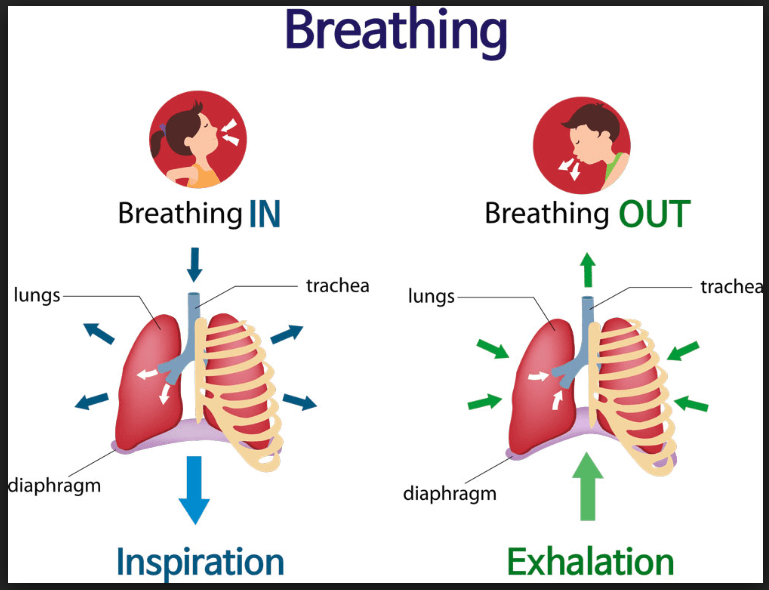
Respiration is an enormously complex activity that is comprised of two differing processes called inspiration and expiration. Through inspiration and expiration, the cells of the body continually exchange two gases called oxygen and carbon dioxide. The body simultaneously breathes in oxygen and expels carbon dioxide. Inspiration is the process of inhaling air into the lungs; likewise, it occurs when a patient breathes in. Expiration is the process of exhaling; therefore, it takes place when a patient breathes out.

Inspiration and expiration are massively important processes to the continual functioning of all human bodies since they are responsible for keeping the blood, organs and tissues rich with oxygen (read: inspiration) while ensuring that excess carbon dioxide leaves the body (read: expiration).

Furthermore, the procedure of measuring and recording a patient’s respiration rate is a testable skill on the Texas CNA state test. It is also a testable procedural skill in most other states. Therefore, a nurses aide who wants to pass the CNA state test to obtain certification as a certified nursing assistant will need to know how to accurately take and record a patient’s respiratory rate in the presence of an examiner at the testing site.

According to Pearson Vue (2018), a patient’s respirations should be counted and recorded using the following listed sequence of steps during the skills portion of the state CNA examination:

  1. The nursing assistant should explain the procedure to the patient in a slow and clearly understandable manner while maintaining regular face to face contact as needed.
  2. The nursing assistant must measure the patient’s respiratory rate for one entire minute (60 seconds).
  3. The nursing assistant should ensure that the patient’s call light or signaling device is within easy reach prior to ending the skill.
  4. The nursing assistant must wash his or her hands prior to recording the patient’s one-minute respiratory rate.
  5. The nursing assistant must document a respiratory rate number that is within two breaths of the examiner’s recorded reading. For instance, the nursing assistant will pass this skill if he or she records a respiratory rate of 16, even if the examiner had  documented a respiration rate of 14.

To pass the procedural skill of measuring and recording respirations on the CNA state exam, the test taker’s documented one-minute respiration rate must fall within a predetermined range of plus or minus two breaths of the test site examiner’s recorded reading. Here are a handful of additional tips that can potentially help with obtaining a respiration rate from patients in clinical settings:

  1. Perform the opening procedures before starting the skill.
  2. Count it as one respiration each time the patient’s chest rises.
  3. Count the respirations for one entire minute (60 seconds) to obtain the one-minute respiratory rate.
  4. Record the respiratory rate as indicated.
  5. Perform the closing procedures after ending the skill.

REFERENCES

All About Medical Training. (2015). Count and Record Respirations – CNA Skill Video AAMT. Retrieved from https://www.youtube.com/watch?v=VS0adbHFneA

BioSpine Institute. (2018). Breathing (picture). Retrieved from https://biospine.com/diaphragm-back-pain/

Pearson Vue. (2018). Texas Nurse Aide Candidate Handbook. Retrieved from https://home.pearsonvue.com/getattachment/73a0c524-4cbe-401a-aa5c-fe1ebf4e2517/Texas

Nursing Career Ladder in the United States (Part Three): the Registered Nurse (RN)

healthy clinic doctor health
Photo by Pixabay on Pexels.com

This post is intended to be the third in a four-part installment series that aims to illuminate the dynamic, ever-evolving nursing career ladder in the United States.

The first post in this particular series discussed certified nursing assistants, known as CNAs for short. The second post in this series elaborated on the unique importance of licensed practical nurses (LPNs), also known as licensed vocational nurses (LVNs) in the states of California and Texas. This post will shed some light on registered nurses.

A professional registered nurse, known as an RN for short, is a multi-faceted healthcare professional who is entrusted with the delivery of both direct and indirect nursing care duties and responsibilities. During the course of providing nursing care, the RN observes, assesses and records objective signs and subjective symptoms that patients experience.

RNs document additional findings such as reactions to treatments, progress and patient outcomes. The RN’s keen observations and clear documentation serve as the the hardcore foundation for the planning of patient care, initiation of interventions, and overall evaluation of the patient care that is being provided.

RNs routinely report changes in patients’ conditions to the physician and carry out physicians’ orders as indicated. Moreover, RNs promptly respond to subtle and overt changes in condition to prevent further deterioration of patients’ health statuses. RNs work work in bedside or clinical settings may perform a wide repertoire of procedural skills such as medication administration, complex wound care, respiratory ventilator management, and so forth.

RNs plan all aspects of the care of their patients. In fact, RNs continually formulate and revise nursing plans of care. RNs also teach and educate patients and families on the provision of appropriate care techniques. They also help different individuals, groups and populations to sustain and/or improve their various health statuses.

Professional registered nursing practice regularly draws upon an amazingly large fund of knowledge in order for the nurse to deliver appropriate assessment, planning, nursing diagnoses, intervention and evaluation. These actions, collectively referred to as the nursing process, are executed in a timely fashion to promote patients’ health statuses, prevent devastating illnesses and help clients manage their varied disease processes.

RNs can be found working in varied healthcare settings such as hospitals, extended care facilities, hospices, clinics, doctors offices, home health companies, colleges, universities, occupational health centers, private duty cases, and psychiatric facilities. RNs also work for insurance companies, research firms, governmental agencies, jails, prisons, public health centers, parishes, pharmaceutical corporations, and an array of other workplace settings.

While state laws tend to dictate nursing’s breadth and scope of practice, it is often the specific needs of the patient load on a particular day that determine the RN’s duties for that day. To become an RN, a prospective candidate must graduate from a state-approved nursing program at a community college, diploma school of nursing, trade school, technical college, or university. The graduate must also pass a national exam to secure state licensure as a registered nurse.

Many certified nursing assistants (CNAs) continue their education to become LPNs and/or RNs, thereby ascending the nursing career ladder. Legacy Healthcare Careers offers four-week CNA classes in the Dallas/Fort Worth area that are affordable and will fit in with prospective pupils’ budgets and lifestyles. Call (682)626-5266 or the 24-hour hotline at (682)313-6404 to enroll at our Mid-Cities / HEB area location.

Be sure to look for the fourth and final post in this information-packed four-part series on the dynamic nursing career ladder in the United States. Also, do not forget to place a quick telephone call to Legacy Healthcare Careers at (682)626-5266 or the 24-hour hotline at (682)313-6404 to enroll in fast-track certified nursing assistant (CNA) training coursework.

Nursing Career Ladder in the United States (Part One): Certified Nursing Assistants

person using black blood pressure monitor
Photo by rawpixel.com on Pexels.com

This post is the first of a four-part series that will aim to elucidate the nursing career ladder in the United States. The certified nursing assistant (CNA) is the core foundation and backbone of the nursing career ladder in the United States. Without the hard work and merit-worthy contributions of CNAs, most nurses who work in direct patient care capacities would have extreme difficulty accomplishing the myriad of duties and tasks.

CNAs are vital allied healthcare workers who deliver basic nursing care to patients, residents and clients under the supervision of licensed nurses and physicians. CNAs assist patients and residents with the care tasks that the patient might be unable to do on his or her own due to weakness, debility, illness, cognitive impairment, fluctuations in mentation, or a variety of other reasons.

In essence, CNAs are supervised by licensed nurses while assisting patients with basic nursing care tasks. These basic nursing tasks include routine care duties such as getting dressed, making occupied and unoccupied beds, taking showers, helping with feedings at mealtimes, taking baths, using the toilet, performing incontinent care, taking and documenting vital signs, and observing and reporting changes in patients’ conditions.

CNAs often spend more time with the patient than any other member of the healthcare team. Their insights and observations are often utilized to formulate patients’ plans of care. In addition, CNAs report their observations and suspected changes in patients’ conditions to the nurse. Therefore, the role of a CNA is vital to the functioning of the healthcare industry in the United States.

CNAs can be found working in hospitals, home health companies, private duty cases, skilled nursing facilities, group homes, clinics, psychiatric facilities, rehabilitation centers, hospices, adult daycare settings, prison infirmaries, the military, and a number of other types of workplace settings.

CNAs, also known as nurse aides, are the premier backbones of the majority of hospitals, healthcare centers and skilled nursing facilities in the United States.  Legacy Healthcare Careers LLC provides low-cost, high-quality certified nursing assistant classes that will prepare prospective pupils for a dynamic career in allied healthcare as a Dallas/Fort Worth nurses aide in just a few weeks. Telephone (682)626-5266 or the 24-hour hotline at (682)313-6404 to enroll in CNA classes in the Mid-Cities / HEB area.

While the CNA occupies an amazingly important role in the nursing profession, many nurses aides opt to utilize the CNA career as a foundation-like springboard into other higher-paying nursing career pathways such as the licensed practical / vocational nurse (LPN / LVN), professional registered nurse (RN), and the advanced practice nurse (APN). In other words, many CNAs choose to climb up the nursing career ladder for increased pay and employment opportunities filled with more complexities.

Please stay tuned for part two of this four-part series that sheds some light on the nursing career ladder in the United States.

Where Can I Train to Become a Certified Nursing Assistant (CNA) in the Dallas-Fort Worth Area?

computer desk laptop stethoscope
Photo by Negative Space on Pexels.com

When the topic of nurse aide training is brought to the forefront, a number of different options are available to a prospective student located in the Dallas-Fort Worth area of Texas who would like to train to become a certified nursing assistant (CNA). CNAs are also known as nurses aides, patient care assistants, nursing aides, nursing assistants, and orderlies.

First of all, multiple local community colleges provide high-quality nursing assistant training in the Dallas-Fort Worth metroplex. Some of the local community college programs that deliver nursing assistant training programs include Brookhaven College, Tarrant County College (TCC), North Central Texas College (NCTC), Hill College, Trinity Valley Community College (TVCC), El Centro College, Weatherford College, and Navarro College.

Community college CNA programs are wonderful options for several reasons. First and foremost, community college CNA programs tend to be very affordable. Second of all, community college CNA programs simultaneously provide excellent nurse aide training, academic instruction and practical hands-on preparation to pupils.

Nonetheless, a major drawback associated with typical community college CNA programs is the fact that the training can sometimes take eight (8) weeks or longer to complete. Not everyone wants to spend half a semester in the nurse aide training program. After all, time is of the essence.

Another potential drawback is that these community college CNA programs frequently have inflexible admissions requirements that may exclude many wonderful prospective students. Normally, these programs attract far more interested applicants than can be reasonably admitted while not having enough seats available to everyone who would like to attend CNA school. In other words, some prospective students are turned away due to seats filling quickly at community college CNA programs.

image (3)

Legacy Healthcare Careers LLC is a school that provides very affordable CNA classes in the heart of the Dallas-Fort Worth metroplex. The CNA lessons are approved to operate by both the state Department on Aging and Disability Services (DADS) and the Texas Workforce Commission (TWC).

Tuition is for the certified nursing assistant program is $850 and the program is only two weeks long from start to graduation. Also, Legacy Healthcare Careers offers a fast track one-week CNA program. Moreover, a high school diploma or general education diploma (GED) is not needed to enroll.

In addition, Legacy Healthcare Careers provides theoretical and clinical practicum instruction to students that is based on the Texas-approved state curriculum. Moreover, the one-week and two-week nursing assistant training programs can potentially open the doors to a dynamic allied healthcare career as a nursing assistant in LESS THAN ONE WEEK!

Feel free to call Legacy Healthcare Careers CNA School at (682)626-5266 or telephone the 24-hour hotline at (682)313-6404 for more information regarding enrollment. Classes are starting soon.

https://youtu.be/xRWYLBzBUYE

11-Day CNA Program in the Dallas-Fort Worth Metroplex Area

people coffee meeting team
Photo by Startup Stock Photos on Pexels.com

Legacy Healthcare Careers LLC is a healthcare career school that offers high quality daytime and evening certified nursing assistant programs, phlebotomy classes and medical assistant training in the Dallas/ Fort Worth Metroplex area. Tuition for the career training programs is very affordable, and flexible payment plans are available to fit into most prospective students’ budgets and lifestyles.

In addition, Legacy Healthcare Careers is home to the 11-day CNA program. Students who have the motivation to attend school for eleven long days in a row could graduate as nursing assistants. Call (682)626-5266 for more information on Legacy Healthcare Careers’ eleven (11) day CNA program, or visit 7505 Glenview Drive, Suite I, North Richland Hills TX 76180 for a tour.

Legacy Healthcare Careers offers quality, affordable CNA lessons for a wide service area in the DFW Metroplex that can easily accommodate prospective students who reside in Fort Worth and its suburbs. Students have commuted from Azle, Haslet, Lake Worth, Saginaw, Pelican Bay, Grapevine, Colleyville, Haltom City, Hurst, North Richland Hills, Bedford, Watauga and the Mid-Cities HEB area.

Most of the day, evening and weekend certified nursing assistant programs at Legacy Healthcare Careers are only a few weeks in length, and all CNA lessons are taught by experienced registered nurses (RNs). The fast track nurse aide programs are designed to enable students to jump-start their legacies and brand new careers as nursing assistants sooner rather than later. After all, time is of the essence for most people.

In addition, various Fort Worth area cities and suburbs such as Crowley, Coppell, Burleson, Keller, Everman, Arlington, Euless, Forest Hill, Kennedale, Mansfield, Irving, Grand Prairie, White Settlement, Midlothian, Meadowbrook, River Oaks, Benbrook, River Oaks, Weatherford, Roanoke, Aledo, Dallas, Springtown, and other local surrounding cities are in the service area for Legacy Healthcare Careers CNA School.

Legacy Healthcare Careers CNA school has a conveniently located Mid-Cities HEB area campus that is located smack dab in the middle of the Dallas/ Fort Worth Metroplex. The Legacy Healthcare Careers campus location is convenient to prospective pupils who live in Fort Worth, Arlington, Dallas, the HEB area and surrounding cities, towns and suburbs.

The tuition for the CNA programs is really affordable, competitively priced, and an amazing deal. Legacy Healthcare Careers offers a wide variety of different class schedules and nursing assistant courses that will conveniently fit into the busy lifestyles and schedules of prospective students.

16 years old is the minimum age to enroll with parental consent. Also, no high school diploma or GED is needed to enroll as long as applicants can prove they have completed at least an eighth (8th) grade education by providing a middle school diploma, high school transcripts, high school diploma or college transcripts.

All courses are taught by experienced RNs, which is not the case at other CNA schools in the Dallas/ Fort Worth area. Call the Legacy Healthcare Careers campus line at (682)626-5266 or the school’s 24-hour hotline at (682)313-6404 to ask about scheduling a tour of the school and enrolling in nursing assistant lessons today. Jump-start your legacy right now in the present day to provide a good investment in your future career pathway.

Also visit the school’s website, www.LegacyHealthcareCareers.com or the school’s blog at www.LegacyHealthcareCareers.org for additional information and resources on careers in the nursing profession.

https://youtu.be/wB1CjU-jQR8

CNA School in the Fort Worth Mid-Cities Area of Texas

medic treating patient
Photo by rawpixel.com on Pexels.com

Legacy Healthcare Careers LLC, a CNA school with a fast track 10-day certified nursing assistant program, a phlebotomy technician training program, a medical assistant course and a certified medication aide class, is accepting new students for enrollment. The school is situated at a convenient Mid-Cities HEB area location in the middle of the Dallas / Fort Worth Metroplex region of Texas.

The physical address for Legacy Healthcare Careers CNA School’s campus is 7505 Glenview Drive, Suite I, N. Richland Hills, Texas 76180. The office telephone number for Legacy Healthcare Careers (682)626-5266. In addition, the 24-hour enrollment hotline phone number is (682)313-6404; this phone number is for any needs that arise outside of normal operating hours.

Tuition for the all of the nurse aide training programs at Legacy Healthcare Careers is very competitive and rather affordable. Flexible payment plans are available that will surely fit into most prospective students’ budgets. The phlebotomy technician training program tuition is $750, making it one of the most affordable phlebotomy courses in the DFW metro area at the time of this writing.

Students who attend Legacy Healthcare Careers can graduate free from the burden of years of massive student loan debts because all training programs offered at the school are affordable.

Legacy Healthcare Careers CNA school offers fast-track nurses aide programs that are designed to train prospective students for careers as nursing assistants within a few short weeks. All CNA classes offered at the school deliver high quality instruction in basic nursing care techniques. In addition, all of the CNA classes are taught by professional registered nurses (RNs) with extensive experience in nursing and direct patient care.

The nurse aide programs all consist of a proven blend of theory instruction that occurs in the classroom setting in addition to hands-on lab training. In addition, a clinical practicum externship training phase takes place at a local healthcare center in the Dallas/ Fort Worth area where students get the opportunity to practice hands-on procedural skills on actual patients and residents of the facility.

The nurse aide programs are structured and taught in strict accordance with the 100 hour Texas-approved state curriculum for nursing assistant training. In addition, the nurse aide coursework is taught with an overall focus of ensuring that graduates are able to pass the CNA state test on the first attempt.

image (2)

Moreover, graduates of Legacy Healthcare Careers receive full eligibility to take the Texas state examination to obtain certification as a certified nursing assistant (CNA). A career as a nursing assistant is loaded with fulfillment, steady pay, job security, the potential for lifelong learning, ultimate joy, challenging moments, and the ability to climb up the nursing career ladder.

In other words, CNA training in the Fort Worth area is a solid investment in an individual’s future career prospects. CNA training can quickly boost an individual’s relative value and overall demand in the local employment market. Some people are actually able to double their earning potential by becoming a nurse aide.

Daytime, evening and weekend class schedules are available to accommodate the busy personal schedules of prospective students who choose to enroll. The minimum age to enroll is 16 years of age with parental consent or 18 years old without consent. Also, no high school diploma or GED is needed to enroll as long as the prospective student has proof of an 8th grade education.

Jump-start your legacy today at Legacy Healthcare Careers. Feel free to visit the Legacy Healthcare Careers school website (www.LegacyHealthcareCareers.com) or the Legacy Healthcare Careers blog at www.LegacyHealthcareCareers.org for more information on the school’s CNA programs in the Fort Worth metro area.