
Legacy Healthcare Careers Nurse Aide Training School Introduces the 7-Day CNA Program

Screenshot 2018-12-16 at 1.32.37 PM.png

Prospective students who would like to enjoy a rewarding, fulfilling, invigorating healthcare career as a certified nursing assistant (CNA) in the Dallas / Fort Worth area of Texas now have a fast-track option that enables them to accomplish their occupational goals drastically sooner than average. The members of staff at Legacy Healthcare Careers Nursing Assistant School are extremely excited to introduce the 7-day CNA program.

The caring, professional instructors at Legacy Healthcare Careers Nursing Assistant School can assist prospective pupils to convert their career-oriented dreams into reality in as little as 7 days! Those who are ready and willing to devote one long week to their schooling can enter a new and exciting career pathway in only 7 days. Continue reading for more details about this innovative nurse aide training program.
Screenshot 2018-12-14 at 9.59.52 AM.png

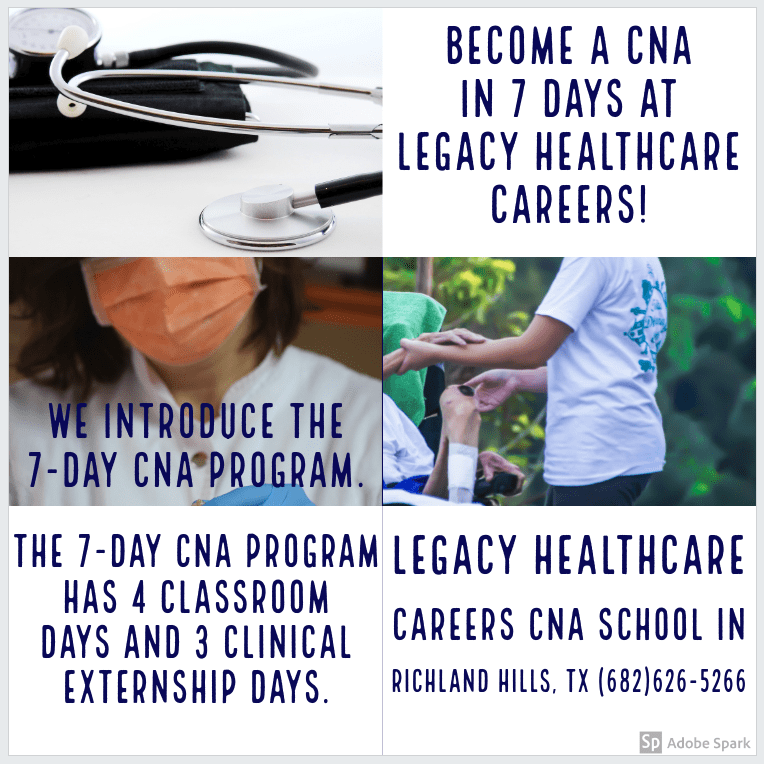
The 7-day CNA program entails attending school for seven long days in a row. The 7-day CNA program consists of four days of nursing assistant theory instruction in the classroom setting. The four days of classroom and lab instruction will be followed by three days of hands-on clinical practicum externship at a local healthcare facility in the Dallas / Fort Worth Metroplex area.

After successful completion of the one week of nurse aide training at Legacy Healthcare Careers Nursing Assistant School, students are considered official graduates who are now legally allowed to secure employment as nursing assistants. Once the nurse aide graduate takes and passes both sections of the CNA state test, he or she is granted state certification as a certified nursing assistant (CNA).

The CNA certification opens the doors to an amazing abundance of healthcare employment opportunities associated with steady income and job security. CNAs are in demand in most employment markets in Texas with employment numbers expected to be on the rise through the year 2026 according to projections from the United States Bureau of Labor Statistics.

In addition, due to longstanding reciprocity and endorsement agreements between nursing assistant registries and boards of nursing in different states in the US, the CNA certification bestows an array of marketable job skills upon the nurse aide graduate that can potentially be transferred from region to region.

Please watch the video below for more information regarding the 7-day CNA program. Moreover, interested prospective applicants should feel free to place a telephone call to Legacy Healthcare Careers Nursing Assistant School at (682)626-5266 to schedule a tour of the school and to inquire about enrollment. Prospective students should also feel free to submit an application to the CNA program online by visiting the school’s website at www.LegacyHealthcareCareers.com.

Texas CNA Skills (Part Eight): What to Wear and How to Dress for the CNA State Test

person performing cpr on dummy
Photo by rawpixel.com on Pexels.com

The broad majority of states in the U.S. have enacted laws that require graduates of nurse aide training programs to pass the respective state-approved examination in order to secure occupational certification as a certified nursing assistant (CNA). Therefore, the CNA state test is extremely important to the future career prospects of countless nursing assistants.

Nonetheless, many nurse aide students remain blissfully unaware that a testing center dress code exists. Well, a dress code certainly does exist for the CNA state test, and more than one rationale for being dressed in a specific way at the testing center site has been presented. The rationales for the dress code have been listed below.

  1. Nurse aide test takers should anticipate the remote possibility of spending all day at the testing center. Therefore, all-day comfort is of the utmost importance.
  2. A nurse aide test taker might be asked to participate in a simulated patient care environment where he or she plays the role of a debilitated elderly patient for one or more other test takers who need to perform hands-on skills. Thus, nurse aide candidates will actually be performing their skills on each other during the skills evaluation section of the CNA state test.
  3. Nurse aide test takers should wear shoes with non-skid soles (bottoms) for safety reasons. The safety of all test-taking candidates needs to be upheld at the testing center.
  4. Any candidate who volunteers to play the role of the patient must wear flat slip-on non-skid closed toe shoes, loose pants or bottoms that are capable of being rolled up, and a loose tank top or loose-fitting shirt with sleeves that can be rolled up to the shoulders (Pearson Vue, 2018).

In general, test takers will never go wrong by dressing the part of an employed nursing assistant regardless of whether or not they opt to volunteer to pose as a patient. The following dress code is more of a basic set of guidelines for appropriate testing center clothing for the CNA state test. Keep in mind that Pearson Vue testing centers are the testing sites where all CNA state tests are conducted in the state of Texas. The following list contains generalities surrounding proper attire in regards to the Texas CNA state test, as well as testing sites in the majority of other states in the US.

  1. Wear closed-toe shoes with flat non-skid soles.
  2. Nurse aide test takers who do not volunteer to play the role of a patient should wear a medical uniform, scrub set, or casual attire. Clothing should be clean.
  3. Nurse aide test takers who choose to wear casual attire should wear jeans, pants, khakis or slacks to comply with the potential need for hands-on skills practice. Dresses and skirts are discouraged with the exception of religious reasons.
  4. Midriffs and abdominal areas should be covered.
  5. Nurse aide test takers should appear clean, groomed, and be free from strong body odor. Perfumes, body sprays and colognes are discouraged.
  6. Nurse aide test takers who wear white bottoms should wear proper underwear since patterned panties, briefs or boxer shorts might be seen through white material.
  7. Long hair should be worn back into a ponytail, bun, contained by a headband, or pinned.
  8. Fingernails should be kept short and trimmed.
  9. Nurse aide test takers must wear a wristwatch with a second hand.
  10. Limit / curtail the amount of jewelry worn to the testing center. The amount of jewelry the nurse aide test taker wears to the testing center site should be minimal.

image (4)

Be completely mindful that the CNA state test dress code is different in a handful of states in the US. For example, CNA state test sites in Arizona require all test-taking candidates to adhere to a very specific dress code, and those who do not comply will not be permitted to take the exam.

With regards to the CNA state test in Arizona, Headmaster LLP (2018) asserts that “SCRUBS (which consists of a scrubs top and scrub pants, scrub skirt (long, loose-fitting) or scrub dress (long, loose-fitting) and closed-toed, soft-soled shoes are the required dress code for testing. You will not be admitted for testing if you are not wearing scrub attire and the appropriate shoes. You will be considered a NO SHOW. You will have to pay for another exam date.”

Be sure to dress for success on the day of the CNA state test and beyond. The nurse aide testing site evaluator is the individual who will be observing for competency as the test taker performs the skills evaluation section of the state test. Dressing the part for the CNA state test can go a long way in presenting the image of a candidate who is fully competent, prepared, professional, and serious about his or her future career as a nursing assistant.

Readers have probably heard the olden adage that one never gets a second chance to make a first impression. The point is to present oneself to the testing site evaluator as a nurse aide who deserves to pass the CNA state test. A cleanly nurse aide candidate looks the part, whereas a test taker with 10 gold chains, a tight-fitting cropped top that exposes the torso and dirty blue jeans does not look professional.

https://youtu.be/fidScEV7qBk

REFERENCES

Headmaster, LLP. (2018). Arizona Nursing Assistant Candidate Handbook. Retrieved from http://hdmaster.com/testing/cnatesting/arizona/azformpages/azforms/AZCandidateHandbook%202.1.18.pdf

Pearson Vue. (2018). Texas Nurse Aide Candidate Handbook. Retrieved from https://home.pearsonvue.com/getattachment/73a0c524-4cbe-401a-aa5c-fe1ebf4e2517/Texas


Texas CNA Skills (Part Seven): Critical Element Steps in the Skills Competency Section of the CNA State Test

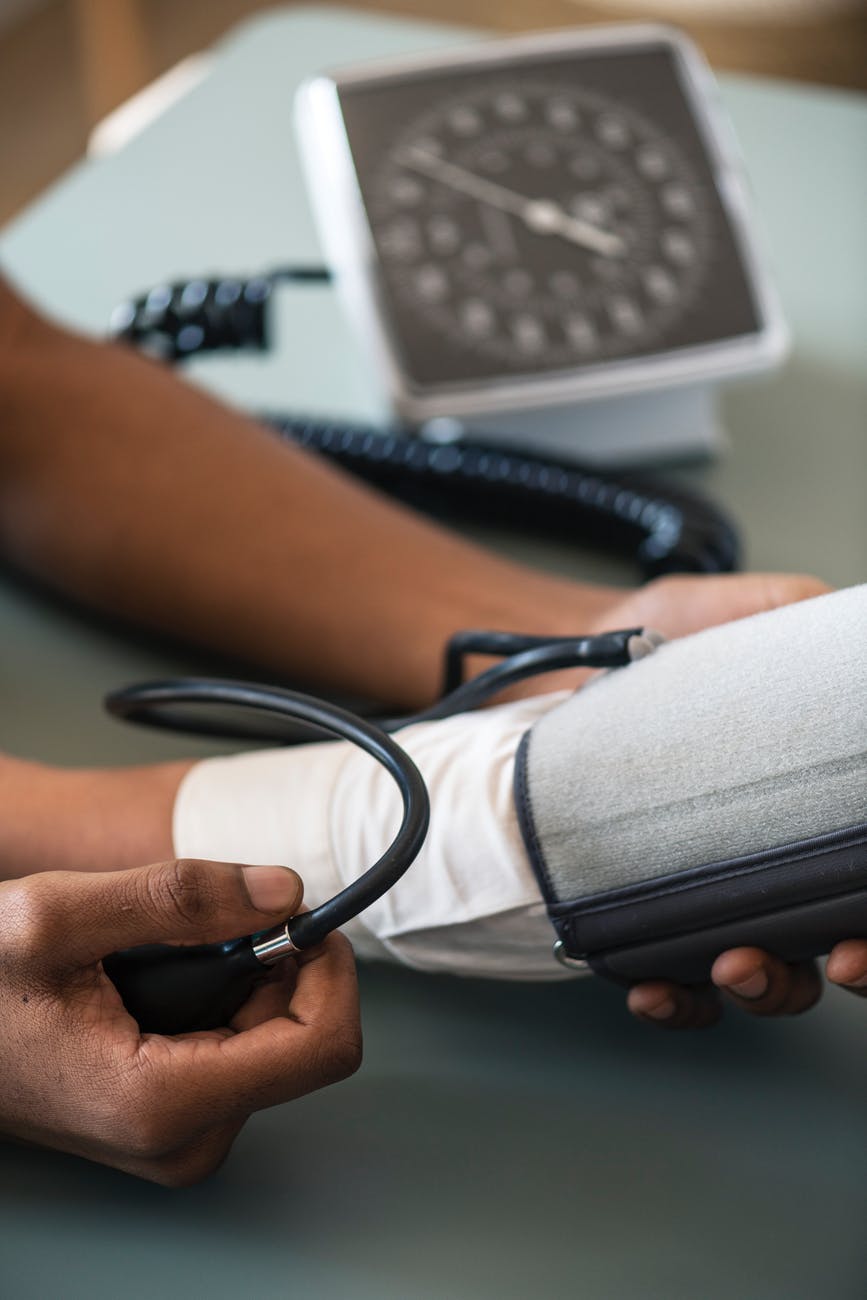
person taking blood pressure
Photo by rawpixel.com on Pexels.com

Nursing assistants who want to obtain certification as a certified nursing assistant (CNA) will need to pass the CNA state examination for the state where they plan to work. In the state of Texas, the CNA state test consists of two sections: a written (or oral) examination with a series of 70 multiple choice questions, as well as a hands-on skills competency evaluation consisting of five procedural skills that are to be performed in the presence of a testing site nurse aide evaluator.

During the skills section of the CNA state test, all test takers will need to successfully perform hand washing as the first procedural skill. Thereafter, the test taker will be required to perform an additional four out of five testable procedural skills. The remaining four testable skills will be selected completely at random.

Before the skills evaluation section of the CNA state test starts, the testing site nurse aide evaluator hands the test taker an instruction card that lists the randomly selected procedural skills that must be completed. Hand washing is the only CNA state test procedural skill that is not selected randomly. In other words, all nurse aide candidates who take the Texas CNA state test will be assigned the skill of hand washing during the skills evaluation portion.

Critical element steps are also referred to as critical steps, key steps, critical items, and critical elements. According to Pearson Vue (2018), critical element steps are the important actions associated with each procedural skill that the test taker must complete with accuracy in order to pass that particular skill. In other words, critical element steps are actions that must always be performed when completing a skill in front of the testing center nurse aide evaluator during the CNA state test.

image (1)

A nursing assistant candidate will most certainly fail the hands-on skills evaluation section of the CNA state test if he or she forgets to perform, misses, or incorrectly performs any critical element steps associated with a particular procedural skill. Also, be advised that most, but not all, skills have critical element steps that need to be correctly done in order to successfully complete the entire procedure with a passing cut score.

As an example, the procedural skill of cleaning an upper or lower denture has no critical element steps associated with it. However, the skill of measuring and recording a patient’s respirations has at least one critical element step attributed to it. Missing, forgetting, or incorrectly completing the critical element step associated with measuring and recording respirations means that the test taker fails the entire skill.

The skill of measuring and recording a patient’s respiratory rate is listed below in a step by step sequence, along with the single critical element step associated with this procedure. The critical element step is emboldened and underlined.

  1. The nursing assistant explains the procedure using clear and slow speech that is understandable. The nursing assistant maintains face to face contact with the client as much as possible.
  2. The nursing assistant measures the client’s respiration rate for one whole minute.
  3. The nursing assistant makes sure that the client’s call bell or signaling device is within reasonable reach.
  4. The nursing assistant washes his or her hands before documenting the client’s respiration rate.
  5. The nursing assistant is to document a respiration rate number that falls approximately within plus or minus two breaths of the testing site nurse aide evaluator’s documented number.

In general, most provisions related to safety, privacy, numerical measurements and infection control are usually regarded as critical element steps for testing purposes while taking the skills competency section of the CNA state test. The test taker cannot miss any critical element steps while performing a hands-on procedural skill at the testing center, or else he or she will automatically fail that particular skill.

In fact, most failures on the skills evaluation portion of the CNA state test can be attributed to the test taker’s omission or forgetfulness of the critical element steps on procedural skills regarding client safety, rights, numerical measurement documentation, or privacy maintenance. In summary, do one’s best to avoid missing any critical element steps at the testing center.

https://youtu.be/b54vRjcOGUA

REFERENCES

Pearson Vue. (2018). Texas Nurse Aide Candidate Handbook. Retrieved from https://home.pearsonvue.com/getattachment/73a0c524-4cbe-401a-aa5c-fe1ebf4e2517/Texas


Texas CNA Skills (Part Six): the Art of Nurse Aide Communication on the CNA State Test

person getting his blood check
Photo by Pranidchakan Boonrom on Pexels.com

Communication can be defined as the ongoing exchange of data, information, thoughts, opinions and feelings among persons by way of utilizing speech, gestures and/or other means (Kourkouta and Papathanasaiou, 2014). Since nursing assistants are on the front lines of direct care in healthcare facilities, the communication skills of CNAs are truly fundamental to smooth interpersonal interactions and enhanced patient satisfaction.

Communication between nursing assistants and their patients is firmly grounded in a trifecta of three essential elements. These three elements include competent social skills, proven communicative techniques, and the Golden Rule of always treating other individuals in the same manner that one would want to be treated.

The communication of each nursing assistant is also guided by several ethical principles. First of all, veracity is defined as truth-telling. Nursing assistants possess the ethical obligation to be truthful (read: veracious) in all communications with their patients. Secondly, the ethical principle of integrity imposes a duty upon all nursing assistants to behave in a straightforward manner while adhering to high standards in all communications and encounters with patients. Finally, the ethical principle of fidelity is defined as being faithful, and nursing assistants have the ethical obligation to exercise faithfulness when communicating with patients.

Communication is also an element that is heavily tied into the skills portion of the CNA state test. The test taker will need to communicate with a patient in a simulated patient care scenario as a testing site evaluator observes. The vast majority of the hands-on procedural skills involve some type of verbal and nonverbal communication in order to pass the CNA state test. For instance, most of the skills on the CNA state test call upon the nurse aide test taker to engage in multiple communicative tasks.

The communicative tasks that are incorporated into the skills portion of the CNA state test often include verbal and nonverbal responsibilities such as introducing oneself as the nursing assistant, vocally identifying the patient, referring to the patient by his or her preferred name, explaining the procedure, maintaining face to face contact whenever possible, and asking if anything else is needed.

The following list is a set of general guidelines on communicating clearly and effectively with patients during the skills competency evaluation section of the CNA state test.

  1. The nursing assistant should greet the patient by his or her preferred name.
  2. The nursing assistant should introduce himself or herself to the patient by announcing one’s name and title (e.g., “My name is Rob and I will be your nursing assistant today.”).
  3. The nursing assistant should maintain face to face contact with the patient whenever possible.
  4. The nursing assistant should avoid staring into space or talking aimlessly. The nursing assistant should focus on the topic to be discussed.
  5. The nursing assistant should occasionally talk to the patient while providing the care.
  6. The nursing assistant should listen to the patient as he or she speaks and respond as needed.
  7. The nursing assistant should utilize appropriate social reinforcements such as praise, smiling, and rephrasing of the patient’s words as needed.
  8. The nursing assistant should encourage the patient to utilize the call light as needed and make sure it remains within easy reach.
  9. The nursing assistant should be cordial, even-tempered and honest in all verbal and nonverbal interactions with the patient.
  10. The nursing assistant should let the patient know verbally when he or she is preparing to exit the room.

REFERENCES

Kourkouta, L., and Papathanasaiou, I. (2014). Communication in Nursing Practice. Materia Sociomedica, 26(1), 65-67.

Texas CNA Skills (Part Five): Charting & Documentation for the CNA State Test and Beyond

people in front of macbook pro
Photo by rawpixel.com on Pexels.com

Documentation is one of multiple vital tasks that the overwhelming majority of certified nursing assistants (CNAs) are entrusted with completing. After all, many prospective nursing students and nurse aides have heard the olden adage that “if it was not documented, it was not done.” Also, any documentation completed by the nurse aide eventually ends up as a permanent part of patients’ medical records. Patients deserve accurate, complete medical records.

Since nursing assistants perform many care tasks and procedures throughout the course of a typical work shift, it would make sense that these tasks will need to be charted accurately. A correct way of documentation exists for CNAs and other healthcare workers in the medical field. On the other hand, a number of incorrect methods of documentation also exist.

Since documentation is such a vital task, it is of the utmost significance for nursing assistants to know how to complete this duty the right way and in a timely manner. In addition, nurse aide test takers who want to pass the CNA state test for certification as a certified nursing assistant will need to know how to chart their various findings and care in a proper manner in order to be successful on the skills section of the exam.

During the CNA state test, documentation is a task that the nurse aide candidate will need to complete at the testing center in front of the examiner for evaluative purposes. The skills section of the Texas CNA state test requires the nurse aide test taker to be tested on five testable skills that are selected randomly.

The nurse aide will need to perform the five aforementioned randomly selected skills step by step in front of the examiner. The nurse aide must achieve a passing cut score on a minimum of four out of the five procedural skills in order to pass the skills evaluation section of the CNA state test.

Also, most of these procedural skills will call upon the test taker to chart or document his or her findings after completion of the procedure. For example, the procedural skill of measuring a patient’s respiration rate must be documented during the skills portion of the CNA state test. Therefore, the testing site examiner will be eyeballing the nurse aide test taker’s charting for accuracy and completeness.

If the documentation step of the procedural skill is not deemed to be accurate by the testing site examiner, the test taker will fail on this skill. For instance, the nurse aide test taker will fail the skill of measuring and recording respirations if he or she documents a respiration rate of 20 breaths per minute when the examiner records a respiratory rate of 16 breaths per minute. In the eyes of the examiner, the charting was inaccurate, so the test taking candidate fails the skill.

Screenshot 2018-12-02 at 4.18.55 PM

Nursing assistants chart their findings based on a combination of observations as well as verbal reports from patients and families. Moreover, these findings can be either objective or subjective in nature. Objective findings are ones that the nursing assistant is able to utilize their senses to hear, see, smell and touch. Objective findings can be proven and measured or directly observed, whereas subjective findings cannot be proven or observed because they are merely what the patient or family member has reported to the nursing assistant.

Objective findings are measurable and/or based in provable fact, such as a blood pressure reading of 118/62 mmHg or urine that is clear and light yellow in coloration. Subjective findings cannot be proven or directly observed by the nurse aide, such as a patient reporting that he has a toothache or a family member reporting that her elderly mother passed out near the bed prior to lunchtime.

To recap, objective findings are clearly based on numerical metrics that can be measured. A heart rate of 72 beats per minute is an objective finding because it is obviously measurable. Objective findings are also based on observable data utilizing the nurse aide’s sense of smell, touch, sight and sound. Therefore, a finding of a patient’s skin that is warm and dry to touch also would be objective data since the nurse aide used his or her sense of touch to come up with that finding.

On the other hand, subjective findings include all data that cannot be measured or verified by the nurse aide’s various senses. If a patient tells nursing members of staff that he slipped and fell in a puddle of orange juice near the dining area after breakfast, this is subjective data because the nurse aide did not see the fall and cannot prove it even took place through his or her sense of sight. If a patient says, “My tummy hurts,” this is a subjective finding because the patient is telling the nurse aide what his pain is.

Pain is subjective because it is a feeling that cannot be measured or observed, and even though a facial grimace can be observable, keep in mind that many patients grimace for reasons other than the unpleasant sensations associated with being in pain. So, anything the patient or her family tells the nurse aide is subjective if he or she did not observe it as it supposedly happened or cannot possibly measure it in any meaningful way.

The following list contains a handful of general guidelines for charting and documenting related to the nurse aide role during the CNA state test, as well as beyond (read: the workplace).

  1. The nursing assistant should utilize the correct chart, paperwork, or ADL form.
  2. The nursing assistant should always avoid the use of felt tipped markers when recording findings in the medical record.
  3. The nursing assistant must bring three sharpened no. 2 pencils to the testing center to take the CNA state test.
  4. The nursing assistant must record all vital signs in the appropriate sections on the paperwork provided.
  5. The nursing assistant should correct mistakes by crossing them out with one line. The nursing assistant should proceed to write his or her initials next to the error.
  6. The nursing assistant must write his or her initials next to all skills that he or she has performed.
  7. The nursing assistant must record all intake and output findings in cc or mL increments and percentages (e.g., 50% of meal was consumed; 750mL of urine output obtained, etc.).
  8. The nursing assistant should document that he or she notified the nurse of any abnormal patient findings or observations.
  9. The nursing assistant should utilize only approved abbreviations and terms when charting.
  10. The nursing assistant should chart subjective findings utilizing quotation marks as stated by the patient (e.g., patient states, “I have a really throbbing headache.”).
  11. The nursing assistant should avoid charting procedures and care that has not yet been provided. The nursing assistant should not record any care before it has actually been delivered.
  12. The nursing assistant should initial the bottom of the paperwork. The nursing assistant must sign the bottom of the document with his or her first name, last name, and title (N.A.). The nursing assistant must date the document.

https://youtu.be/Em5PwX_C1UQ

REFERENCES

Brit2829537. (n.d.). I went into nursing for the charting (image). Retrieved from https://www.someecards.com/usercards/viewcard/i-went-into-nursing-for-the-charting-said-no-nurse-ever–9f173/?tagSlug=workplace


Texas CNA Skills (Part Four): Ending Steps, a.k.a. “Closing Procedures” After Completion of Each Skill on the State Test

red school blur factory
Photo by Gratisography on Pexels.com

In the vast majority of U.S. states, Texas included, a nurse aide candidate who intends to be successful on the the CNA state-approved examination for certification as a certified nursing assistant will need to demonstrate his or her abilities to correctly perform a series of hands-on procedural tasks during the skills section of the state test.

Of course, the demonstration of skills competency is occurring at the testing center in the midst of a simulated scenario. Additionally, an examiner is carefully eyeballing the test-taking candidate for evaluation purposes while he or she is performing the myriad of steps required to complete each skill performance from beginning to conclusion.

A grand total of 22 testable skills exist on the skills portion of the CNA state test in Texas that a test taker might be called upon to perform. Furthermore, five of the 22 skills are chosen randomly for the test taker to perform from start to finish in the presence of the examiner to demonstrate competency.

The test taker will pass the skills section of the CNA state test if he or she correctly performs four out of five of the randomly selected skills that have been assigned. Hence, it is imperative for the test taker to be completely prepared prior to the testing date by possessing thorough knowledge on how to accurately perform all 22 testable skills.

As a reminder, the test taker is permitted to miss a small, predetermined number of steps that have been deemed not critical and still be able to pass the skills section of the CNA state examination for certification. The main idea is that examiner is observing to ensure that the test-taker knows how to complete all steps associated with each procedural skill.

Nonetheless, be advised that the nurse aide candidate is strictly not permitted to miss or fail to perform any critical steps of a procedural skill during the skills portion of the Texas CNA state test. Customarily, provisions related to infection control (read: hand hygiene), maintenance of a safe environment (read: bed in low position and side rails up), upholding patient privacy (read: keeping doors and privacy curtains closed) and ensuring a signaling device or call light remains within reasonable reach are considered critical steps.

To recap, critical steps are ones that need to always be performed when demonstrating skills competency at the testing center during the CNA state test. A test taker will fail the skills competency section of the CNA state examination if any critical steps associated with a particular skill are missed or forgotten. For instance, forgetting to wash one’s hands after removal of gloves would be a missed critical step since hand hygiene is an essential aspect of infection control.

Ending steps are known by a number of differing names, including post-steps, completion steps, ending procedures and closing procedures. Due to the fact that the skills section of the CNA state exam is normally completed as part of one simulated scenario, the closing procedures must be completed once, usually when the scenario is ending. To reemphasize, test takers need to carry out these closing procedures at the end of each CNA state test.

Closing procedures tend to entail routine nursing care steps such as making sure that the patient’s call light or signaling devise is within easy reach, ensuring comfort measures, lowering the bed to a safe position, raising or lowering the bed’s side rails in accordance with the patient’s plan of care, performing hand hygiene, and documenting. According to Professional Healthcare Development (2011), the closing procedures should be completed in the following sequence:

  1. The nursing assistant should utilize proper body mechanics during the performance of all skills.
  2. The nursing assistant should position the patient for comfort. The nursing assistant should position the patient in appropriate body alignment.
  3. The nursing assistant must adjust the bed’s side rails per physicians’ orders and lower the bed.
  4. The nursing assistant should ensure the patient has everything they will need. The nursing assistant should take the time to thank the patient.
  5. The nursing assistant should maintain the cleanliness of the patient’s room per facility policies.
  6. The nursing assistant must remove his or her gloves and wash the hands as the situation dictates.
  7. The nursing assistant should offer to open privacy curtains and doors in accordance with the wishes of the patient.
  8. The nursing assistant must observe the environment for safety, always ensuring that the call light remains within reasonable reach.
  9. The nursing assistant must report any abnormal findings to the nurse.
  10. The nursing assistant must document per facility policies and procedures.

https://youtu.be/GHPuqhc_urA

RESOURCES

Lindsey, Carol. (2010). Ending Procedures (video). Retrieved from https://www.youtube.com/watch?v=TzgyjUcC080

Professional Healthcare Development, LLC. (2011). Performance Skill Procedures. Retrieved from http://www.profhd.com/Skills%20procedures.pdf

Texas CNA Skills (Part One): Hand-Washing, a.k.a. Hand Hygiene Instructions and Video

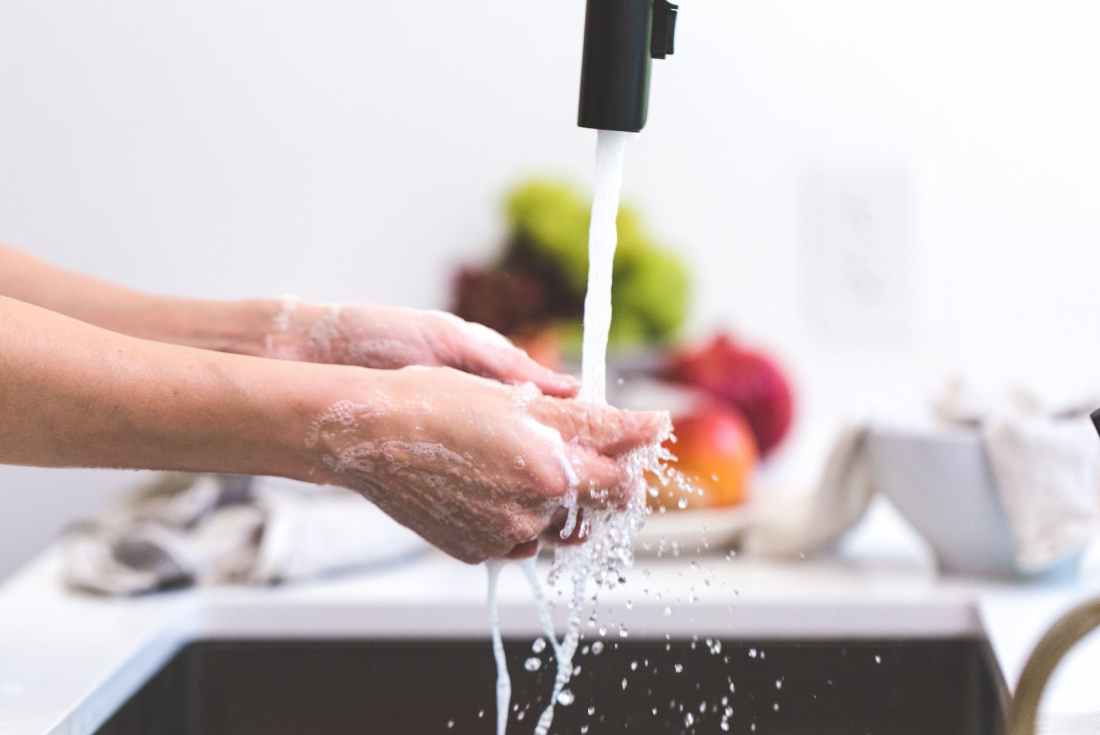
cooking hands handwashing health
Photo by Burst on Pexels.com

Hand-washing is arguably one of the easiest and most effectual methods of infection control in healthcare facilities. Correctly-performed hand hygiene prevents the spread of harmful diseases. In fact, the overarching goal of hand-washing is to remove microbes, dirt, debris and particles from the hands by way of sufficient manual friction along with soap and warm water to prevent the spread of disease-causing germs to vulnerable patients and residents.

In addition, hand-washing happens to be a testable skill on the Texas state examination and skills evaluation test to attain certification as a certified nursing assistant (CNA). During the course of the CNA state test, the test-taker is expected to perform a full hand-washing skill sequence in front of the examiner to ensure that it is being done properly. Thus, a thorough working knowledge of correct hand-washing techniques is imperative in order for a candidate to pass the skills portion of the state exam.

Without satisfactory knowledge of hand-washing techniques, a test taker could quite possibly fail the skills portion of the state test, resulting in a disappointing loss of time, money, effort and confidence. Who wants to continually retake the CNA state exam? Not you! In other words, it would be an excellent idea to know how to perform the skill of hand-washing in the precise manner that the state test examiner wants it completed.

CNAs and other healthcare workers will need to wash their hands multiple times per work shift during the course of performing direct care. The nurse aide must perform proper hand hygiene before entering patients’ rooms, prior to exiting patients’ rooms, before and after feeding residents, after handling unclean bedding and linens, prior to performing procedures on patients, and after coming into contact with skin tears and open wounds.

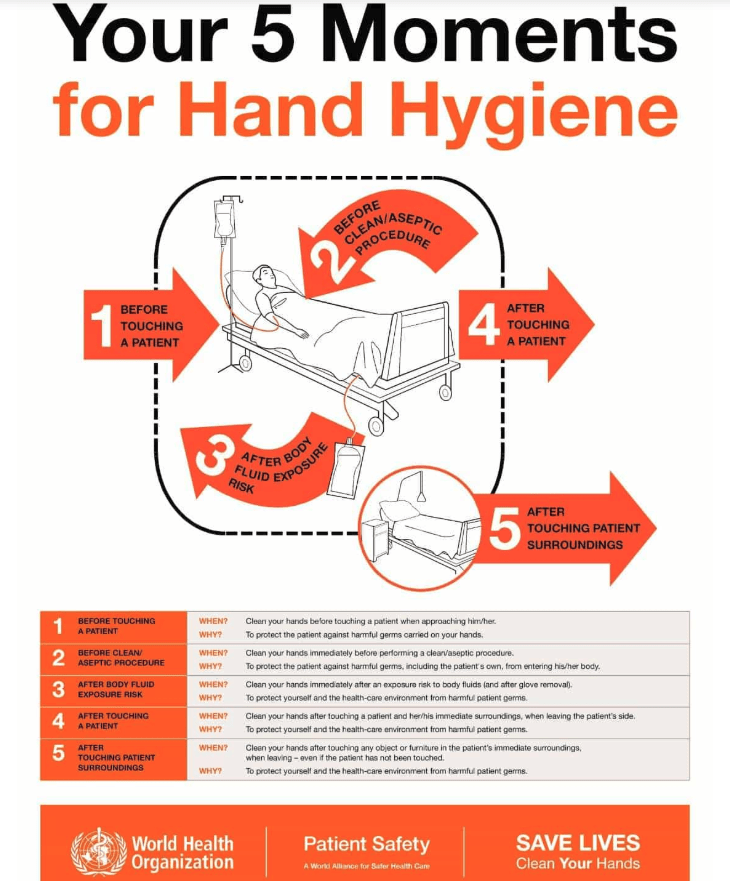
Again, the rationale for hand-washing is to reduce the likelihood of transmitting infectious germs. The World Health Organization (2009) asserts that five instances are appropriate for hand hygiene: 1) prior to contact with patients and residents; 2) prior to performing clean and/or aseptic tasks; 3) after body fluid exposure risks; 4) after contact with patients and residents; 5) after making contact with patients’ surroundings.

Screenshot 2018-11-30 at 9.58.40 PM.png

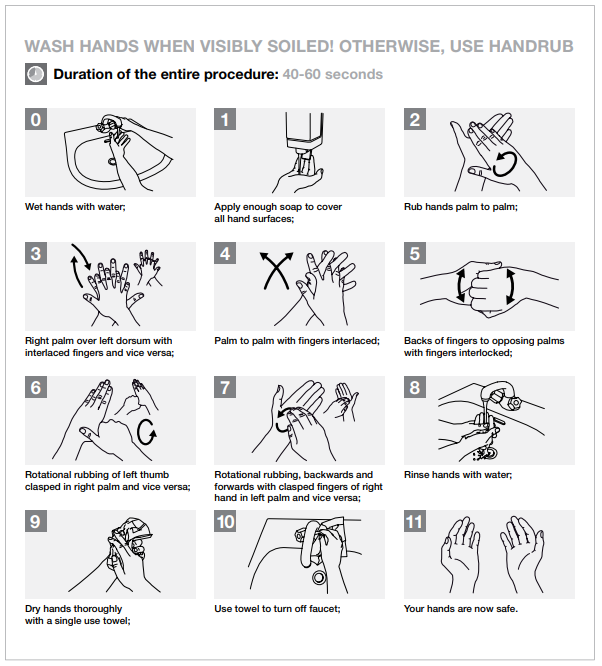
To successfully complete the hand-washing skill for the Texas CNA state exam, Pearson Vue (2018) asserts that this procedure should be performed utilizing the following steps in the order that has been listed below:

  1. The nursing assistant must refer to the patient by his or her name. The nursing assistant must also introduce himself or herself to the patient by name.
  2. The nursing assistant must proceed to turn on the water faucet at the sink.
  3. The nursing assistant needs to completely wet his or her hands and wrists.
  4. The nursing assistant adds a sufficient amount of soap to his or her hands.
  5. The nursing assistant must ensure all surfaces of his or her hands, wrists and fingers are lathered up for a minimum of 20 seconds while using sufficient friction. While lathering up, make sure the hands remain lower than the elbows. While lathering up, also make sure elbows and fingertips are kept down.
  6. The nursing assistant needs to clean his or her fingernails by rubbing the fingertips against the palms of the opposite hand.
  7. The nursing assistant must rinse off all surfaces of his or her hands, wrists and fingers while being sure to keep the hands lower than the elbows and the fingertips down.
  8. The nursing assistant must use dry paper towels to dry off all surfaces of his or her hands, wrists and fingers while starting at the fingertips. The nursing assistant then must proceed to dispose of the used paper towels into the wastebasket receptacle.
  9. The nursing assistant must use dry paper towels to turn the water faucet off before properly throwing the used paper towels into the wastebasket receptacle.
  10. The nursing assistant must not touch the inside of the sink during any point in time while performing the hand-washing skill in front of the examiner.

REFERENCES

All About Medical Training. (2015). Hand Hygiene (Hand Washing) CNA Skill Video AAMT. Retrieved from https://www.youtube.com/watch?v=6ae0eODZyNQ&t=2s

Pearson Vue. (2018). Texas Nurse Aide Candidate Handbook. Retrieved from https://home.pearsonvue.com/getattachment/73a0c524-4cbe-401a-aa5c-fe1ebf4e2517/Texas

World Health Organization. (2009). Hand Hygiene: How, Why & When? Retrieved from http://www.who.int/gpsc/5may/Hand_Hygiene_Why_How_and_When_Brochure.pdf

Screenshot 2018-11-30 at 10.27.07 PM

Nursing Career Ladder (Part Four): the Advanced Practice Nurse

doctor pointing at tablet laptop
Photo by rawpixel.com on Pexels.com

This post is the fourth and final one in this four-part installment series that has aimed to put a spotlight on the diverse nursing career ladder in the United States.

The first post in this particular series discussed certified nursing assistants, known as CNAs, and the second post elaborated on the unique importance of licensed practical nurses (LPNs), also known as licensed vocational nurses (LVNs) in the states of California and Texas. The third post highlighted the significance of registered nurses. This fourth post will shed light on advanced practice nurses.

An advanced practice nurse, or APN, is also known as an advanced practice registered nurse (APRN). The APN is a registered nurse (RN) with additional educational attainment, specialized training and a wide knowledge base that soars above and beyond the customary bedside RN role.

According to the American Nurses Association (2018), APNs include nurse practitioners, clinical nurse specialists, nurse anesthetists, and nurse midwives. Additionally, all APNs possess a vital place in the future of the entire healthcare system in the United States. APNs routinely serve as patients’ primary care providers. They are placed at the forefront of the provision of preventative healthcare to the public as a whole.

APNs treat and diagnose disease processes, possess the authority to write prescriptions in most states, advise the general public on health issues, and manage chronic disease processes in strict accordance with high quality evidence-based practices. APNs also obtain continuing education to remain abreast of the continual, technical, methodological, and other emergent changes in the nursing profession.

All APNs have attained a minimum of a master of science degree in nursing with an advanced practice specialization. This educational attainment is in addition to the initial nursing education and licensing that is mandated for all RNs. A number of APNs hold doctoral degrees (PhD or DNP). The PhD degree is the doctor of philosophy in nursing science, and the DNP is a doctor of nursing practice degree.

Many APNs started their glorious careers as nursing assistants before ascending the healthcare career ladder through hard work, education, persistence and the pursuit of lifelong learning. Legacy Healthcare Careers is a Dallas/ Fort Worth CNA school in the Mid-Cities/HEB area of Texas that offers coursework to become a nursing assistant in four short weeks.

Feel free to place a telephone call to Legacy Healthcare Careers’ office line at (682)626-5266 or the school’s 24-hour hotline at (682) 313-6404 for enrollment information that might possibly change lives for the better.

Nursing Career Ladder in the United States (Part Three): the Registered Nurse (RN)

healthy clinic doctor health
Photo by Pixabay on Pexels.com

This post is intended to be the third in a four-part installment series that aims to illuminate the dynamic, ever-evolving nursing career ladder in the United States.

The first post in this particular series discussed certified nursing assistants, known as CNAs for short. The second post in this series elaborated on the unique importance of licensed practical nurses (LPNs), also known as licensed vocational nurses (LVNs) in the states of California and Texas. This post will shed some light on registered nurses.

A professional registered nurse, known as an RN for short, is a multi-faceted healthcare professional who is entrusted with the delivery of both direct and indirect nursing care duties and responsibilities. During the course of providing nursing care, the RN observes, assesses and records objective signs and subjective symptoms that patients experience.

RNs document additional findings such as reactions to treatments, progress and patient outcomes. The RN’s keen observations and clear documentation serve as the the hardcore foundation for the planning of patient care, initiation of interventions, and overall evaluation of the patient care that is being provided.

RNs routinely report changes in patients’ conditions to the physician and carry out physicians’ orders as indicated. Moreover, RNs promptly respond to subtle and overt changes in condition to prevent further deterioration of patients’ health statuses. RNs work work in bedside or clinical settings may perform a wide repertoire of procedural skills such as medication administration, complex wound care, respiratory ventilator management, and so forth.

RNs plan all aspects of the care of their patients. In fact, RNs continually formulate and revise nursing plans of care. RNs also teach and educate patients and families on the provision of appropriate care techniques. They also help different individuals, groups and populations to sustain and/or improve their various health statuses.

Professional registered nursing practice regularly draws upon an amazingly large fund of knowledge in order for the nurse to deliver appropriate assessment, planning, nursing diagnoses, intervention and evaluation. These actions, collectively referred to as the nursing process, are executed in a timely fashion to promote patients’ health statuses, prevent devastating illnesses and help clients manage their varied disease processes.

RNs can be found working in varied healthcare settings such as hospitals, extended care facilities, hospices, clinics, doctors offices, home health companies, colleges, universities, occupational health centers, private duty cases, and psychiatric facilities. RNs also work for insurance companies, research firms, governmental agencies, jails, prisons, public health centers, parishes, pharmaceutical corporations, and an array of other workplace settings.

While state laws tend to dictate nursing’s breadth and scope of practice, it is often the specific needs of the patient load on a particular day that determine the RN’s duties for that day. To become an RN, a prospective candidate must graduate from a state-approved nursing program at a community college, diploma school of nursing, trade school, technical college, or university. The graduate must also pass a national exam to secure state licensure as a registered nurse.

Many certified nursing assistants (CNAs) continue their education to become LPNs and/or RNs, thereby ascending the nursing career ladder. Legacy Healthcare Careers offers four-week CNA classes in the Dallas/Fort Worth area that are affordable and will fit in with prospective pupils’ budgets and lifestyles. Call (682)626-5266 or the 24-hour hotline at (682)313-6404 to enroll at our Mid-Cities / HEB area location.

Be sure to look for the fourth and final post in this information-packed four-part series on the dynamic nursing career ladder in the United States. Also, do not forget to place a quick telephone call to Legacy Healthcare Careers at (682)626-5266 or the 24-hour hotline at (682)313-6404 to enroll in fast-track certified nursing assistant (CNA) training coursework.

Nursing Career Ladder in the United States (Part Two): the Licensed Practical Nurse, a.k.a. Licensed Vocational Nurse (LPN / LVN)

Screenshot 2018-11-15 at 11.04.47 AM

This post shall be the second in a four-part series that aims to shed some much-needed light on the illustrious nursing career ladder in the United States. Although the certified nursing assistant (CNA) remains the robust foundation of the nursing career ladder in the United States, the licensed practical nurse deserves a markedly special place on a rung of the very same ladder.

A licensed practical nurse, better known as an LPN, is a trained nurse who delivers basic nursing care duties under the direct and indirect supervision of registered nurses and/or physicians. Basic trained nurses in the US states of California and Texas are known as licensed vocational nurses, or LVNs. In fact, LPNs and LVNs are exactly the same type of nurse, but geographical location and local custom has dictated that their titles differ.

Throughout many instances in the lengthy history of the US healthcare system, LPNs have been respectably referred to as the eyes and ears for RNs and physicians. In the settings where they customarily work, LPNs have the tendency to spend more hands-on time delivering direct care and face to face contact to their patients than both RNs and doctors.

LPNs deliver direct nursing care duties that normally include important tasks such as medication administration, observation, data collection, vital sign acquirement, wound care, charting and documentation, dressing changes, supervision of nurses aides, maintenance of ostomies and feeding tube sites, prompt reporting of significant changes in patient status, measurement of inputs and outputs, and urinary catheter care.

To become an LPN / LVN, a prospective candidate must successfully complete a state approved practical nursing program. Completion of a state-approved practical nursing program generally takes about 12 to 18 months from start to finish. In the states of California and Texas, these programs are referred to as vocational nursing programs.

Practical and vocational nursing programs can be found in a diversely interesting variety of educational institutions such as community colleges, trade schools, private academies, and technical colleges. Practical and vocational nursing programs are also offered at many adult education centers, regional occupational programs (ROP), career training schools, and state universities.

Admissions requirements tend to vary depending on the type of institution and the competitiveness of the specific program. Generally speaking, practical nursing programs with the most affordable tuition attract more applicants, so admissions at the schools with the cheaper LPN programs are usually more competitive.

Also, practical nursing programs with excellent reputations in the local community often have competitive admissions processes because since students want to be associated with reputable schools. On the other hand, LPN/LVN programs that are owned and operated by for-profit corporations will usually have far less competitive admissions requirements due to factors such as high-priced tuition and issues with reputability.

The practical / vocational nursing graduate will also need to successfully pass a national licensing exam in order to secure a state license as an LPN / LVN. The name of this national licensing exam is the NCLEX-PN, and it is offered in all 50 U.S. states. Moreover, LPNs /LVNs can utilize a process called endorsement to obtain nursing licensure in additional states.

LPNs / LVNs can be found employed at nursing homes, hospitals, clinics, physicians offices, hospices, home health companies, private duty cases, blood banks, psychiatric facilities, camp sites, and physical rehabilitation centers. LPNs also work at schools, employee health centers, jail intake centers, prison infirmaries, the military, and same-day surgery suites.

Be on the lookout for the third post in this informative four-part series on the United States nursing career ladder. Also, place a telephone call to the Legacy Healthcare Careers campus at (682)626-5266 or call the 24-hour hotline at (682)313-6404 to enroll in affordable fast-track certified nursing assistant (CNA) training classes.

Feel free to visit the school’s website at http://www.LegacyHealthcareCareers.com for additional information and resources on careers in the nursing profession. After all, many LPNs and LVNs had originally entered the nursing profession by working as CNAs before ascending the nursing career ladder.

A career as a CNA can potentially serve as a wondrous springboard into the nursing profession. Jump-start your legacy today to make a wise investment in your professional and economic future.