The Top Five Abilities Needed For a Career in Healthcare

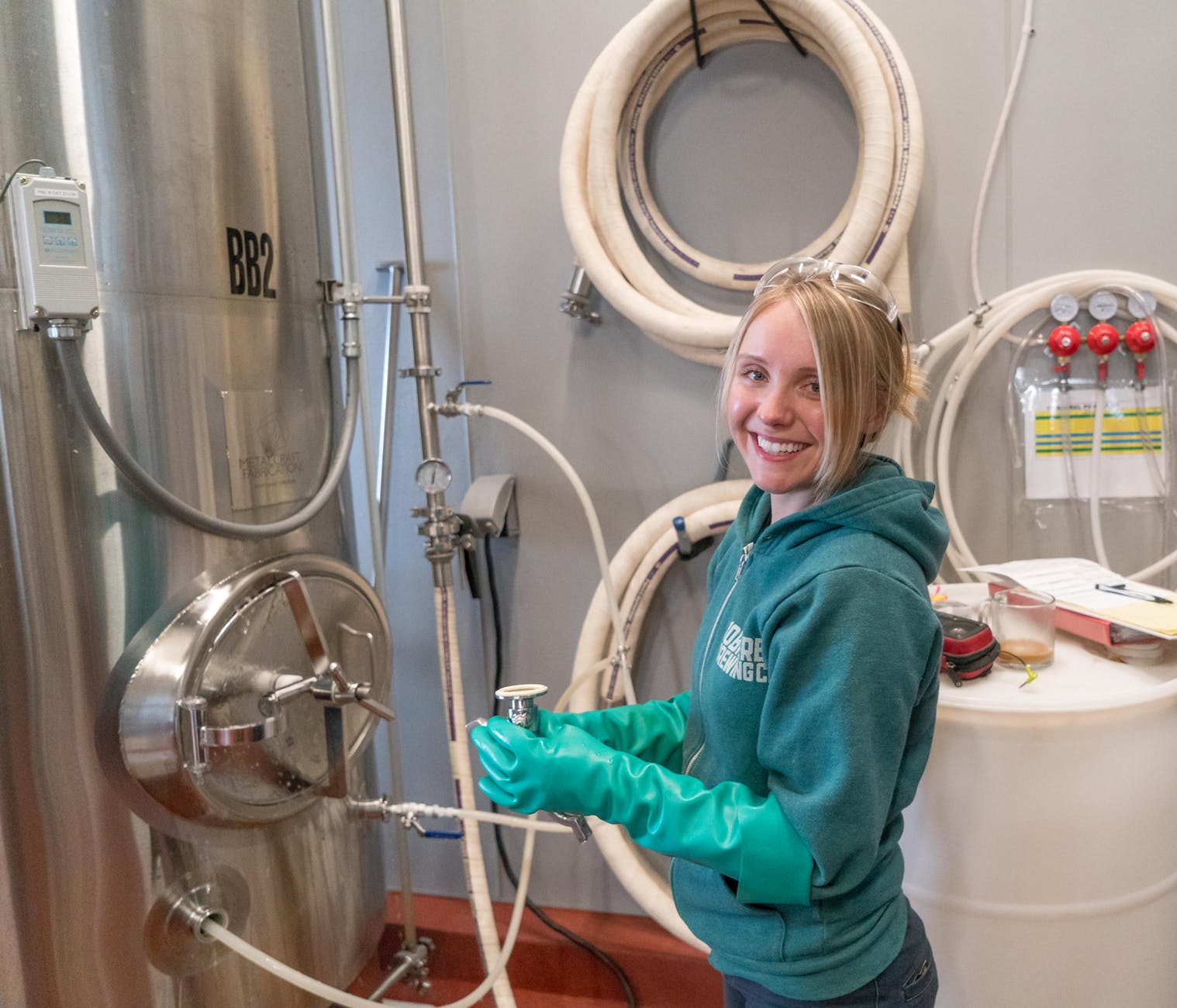
woman wearing pair of teal rubber gloves standing near white barrel
Photo by ELEVATE on Pexels.com

Many people know that healthcare is an enormous industry in the US as well as around the world. This essentially means that healthcare is home to a large number of job openings that must be filled with qualified candidates on a regular basis. Also, most of these jobs come with advantages such as steady income, benefits, flexible work schedules, great colleagues, and a refreshing sense of fulfillment that most people can only achieve from providing assistance to others in need.

Therefore, the healthcare and medical fields have the potential to offer lucrative job opportunities to masses of people on a tremendously massive scale. In addition, the majority of people will always require healthcare and medical services throughout the length of their lifespans. This is true with or without regard to peoples’ health statuses. Still, several defined abilities exist that persons would be wise to learn if they are seriously thinking about joining the ranks of the healthcare sector.

The following list contains some descriptions of the specific abilities that people need in order to succeed in healthcare and the medical field on a long term basis. Smart readers will soon recognize a very noteworthy pattern: none of these abilities are hands-on procedural skills. This is because a worker can be outstanding in the realm of performing medical procedures and, at the same time, act in an utterly horrid manner toward the same patients who need those procedures.

The Top Five Abilities People Need For a Career in the Healthcare Industry

  1. Problem Sensitivity is the ability of an individual to determine when something is wrong or is highly likely to go wrong. This ability does not have anything to do with actually working toward resolution of the problem. Rather, problem sensitivity only deals with accurate recognition of actual and potential problems. An example of a healthcare worker displaying problem sensitivity is a nursing assistant who recognizes that something might go terribly wrong when he sees a confused patient trying to pull out her IV line.
  2. Deductive Reasoning is the ability to move from generalizations to specifics in order to formulate solutions and solve problems in the workplace. For instance, a nurse might have generalized that people with good cardiovascular health work out routinely. The nurse then meets a 90-year-old lady in good cardiovascular health before using deducting reasoning to come up with the specific conclusion that this elder probably exercises routinely. The nurse uses deductive reasoning to design a fitness initiative in her community hospital.
  3. Inductive Reasoning is the ability to assemble specific bits of data and information to formulate general conclusions about occurrences in the workplace. An example of someone in the medical field using inductive reasoning is a clinic manager who notices that a certain medical assistant always arrives to work at 8:30am. This particular medical assistant is never late to work. The clinic manager comes up with the general conclusion that if the medical assistant continues to arrive at work at 8:30am, she will never be late to the workplace.
  4. Adaptability refers to one’s ability to deal with change, approach different situations as they arise, and work either alone or with other people as part of a team. The ability to adapt is a notably broad trait that most employers prefer workers to possess. In essence, adaptability is the ability to manage workplace changes and respond in a beneficial manner. Since the healthcare field is constantly evolving, healthcare workers must have the ability to adapt to changes.
  5. Prioritization is the ability of a person to properly rearrange workplace activities in order of importance relative to each other. In the context of the medical field, the ability to prioritize is crucial in clinical workplace settings that call upon workers to multitask. In these workplace environments, healthcare workers must juggle various priorities and figure out which tasks are most important during each workday. For instance, one patient’s complaint of chest pain must be prioritized over another patient’s request for pancake syrup.

Join the ranks of the healthcare field in just two weeks at Legacy Healthcare Careers by completing the two-week CNA training program. Call (682)626-5266 to enroll.
Texas CNA Skills (Part Eighteen): Skills That Are Not Performed on Other Live People at the CNA State Test

Screenshot 2019-05-29 at 9.04.42 AM

Candidates and test takers who have completed a nurse aide training program must attain a passing score on the National Nurse Aide Assessment Program exam, more commonly known as the CNA state test, in order to receive state certification as a certified nursing assistant (CNA) in Texas. The CNA state test consists of two parts: a written section with 70 multiple choice questions as well as a skills evaluation.

Both the written section and skills evaluation of the CNA state test must be passed in order to receive state certification. The skills evaluation requires the test taker to demonstrate five testable skills in the presence of a nurse aide evaluator (NAE) who is scoring them as he or she observes the performance of each skill. There are exactly 22 testable skills that could appear on the CNA state test in Texas, and five of them will be selected at random for the test taker to perform.

Out of the 22 testable skills, 15 of them are to be performed on a live person at the CNA state test. In other words, the vast majority of skills will be performed on a random student with whom the test taker will be partnered at the Pearson Vue testing center. This is a reciprocal process because the two partners will be performing their five skills on each other as the NAE observes the skills demonstrations for scoring purposes.

Only seven of the 22 hands-on skills are not performed on a live person at the Pearson Vue testing center during the skills evaluation portion of the CNA state test. The first skill is hand hygiene (a.k.a. hand-washing); of course, test takers will demonstrate how to wash their own hands in front of the NAE. Thus, hand hygiene is not done on another live person. Keep in mind that all test takers will be required to complete the hand hygiene skill due to the emphasis on infection prevention.

Moreover, the personal protective equipment (PPE) skill, which requires the test taker to don and doff a gown and a pair of gloves properly, is not performed on another live person. The test taker will be dressing oneself in the PPE items before demonstrating how to appropriately remove and dispose of them. Another skill that will not be performed on a live person at the CNA state test is denture care. Rather, the test taker will demonstrate how to correctly provide care for an upper or lower denture.

Measurement and recording of urinary output is yet another skill that the test taker will never perform on a live person at the testing center. The test taker will be called upon to accurately measure the amount of simulated urine in front of the NAE before recording the numeric result. Measuring and recording urinary output is considered one of the five measurement skills that requires correct documentation at the Pearson Vue testing center in order to achieve a passing score.

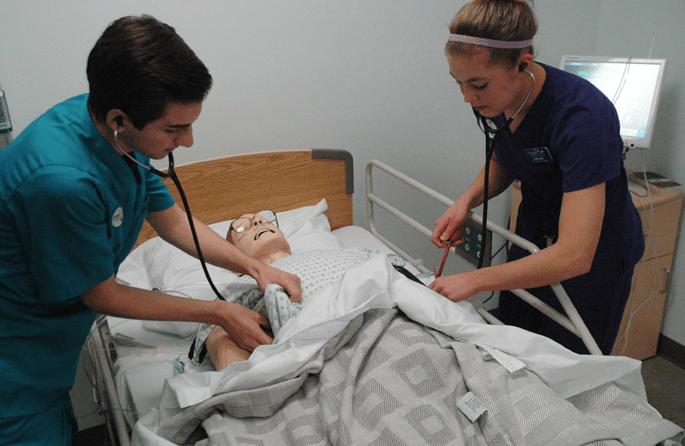
Due to concerns that revolve around privacy, safety and infection control, the skills of catheter care, perineal care and applying an elastic stocking to one leg will always be performed on a mannequin at the CNA state test. In essence, these three skills are not done on a live person at the Pearson Vue testing center. This bit of knowledge often relieves test takers since they would feel uncomfortable if a random student wiped their most private areas in front of a NAE during a perineal care skill demonstration.

Do you want to become a nursing assistant in two weeks in the DFW area? Call Legacy Healthcare Careers at (682)626-5266 where you will be trained to pass the Texas CNA state examination on your first attempt.

11-Day Evening & Night CNA Classes in the DFW Area

blue and silver stetoscope
Photo by Pixabay on Pexels.com

Many adult learners want to either continue their educations and/or retrain for a new career pathway. Therefore, night classes can serve as a very convenient way to pursue all those educational goals that may have been deferred or tossed aside long ago. In essence, evening and night classes allow busy adults to finish the same educational pursuits that they had always wanted to achieve before their lives became somewhat hectic.

Legacy Healthcare Careers offers several affordable 11-day nursing assistant (CNA) night classes in the DFW area between Dallas and Fort Worth, Texas. The next 11-day CNA evening class starts on Monday October 28th with a projected graduation date of November 8th, while another 11-day night CNA class begins later in the month of November. Call (682)626-5266 to enroll in night CNA classes near Dallas and Fort Worth.

Life tends to become busy in ways that can distract people from their long term goals, and if a person is attempting to manage a full schedule, night CNA classes can be really convenient. In an intensely competitive local employment market, the more training an individual has, the merrier his or her job prospects. Job training gives people a competitive advantage. Evening and night classes allow us to continue day routines while fulfilling job training goals during late night hours.

In addition to the extreme convenience, going to night CNA classes can come with a myriad of other positive aspects. Adults with full time jobs who might be unable to get ample time off during the daylight hours to go to classes on a more traditional schedule will need night classes to allow them to retrain for new careers and improve their overall value in the job market. Working while going to school can help offset the cost of classes while still leaving ample time to be with family and friends.

Call (682)626-5266 to either schedule a tour of Legacy Healthcare Careers CNA School and/or ask about enrolling in one of their evening/night CNA classes with a convenient Mid Cities location directly between the DFW cities of Dallas and Fort Worth. The school is located at 7505 Glenview Drive, Suite I, Richland Hills TX 76180.

2-Week CNA Program Registration: Friday May 17, 2019 From 2:00 to 5:00pm

Screenshot 2019-05-08 at 11.00.53 PM

Legacy Healthcare Careers CNA School, a family-owned institution in the Mid Cities section of the DFW metro area, is hosting an open registration event on Friday May 17th from 2:00pm to 5:00pm. The address is 7100 Blvd. 26 #205, Richland Hills TX 76180. This event gives potential students the chance to quickly register for 2-week day and evening certified nursing assistant (CNA) training classes that will begin on May 20, 2019.

As an optional courtesy, please feel free to RSVP to Ms. Kee Randall by telephoning (682)313-6404. Students who enroll in one of the the upcoming 2-week CNA training programs begin coursework on May 20th and graduate just two weeks later on June 3, 2019. As an option, another class begins on June 11th, thereby allowing students to graduate just two weeks later on June 25th.

One of these programs is a daytime CNA class, while the other one is a nighttime CNA class. Therefore, students have their choice of start dates and potential class schedules so as to fit in with peoples’ busy lifestyles outside the school setting. Students who attend CNA classes will be able to continue working their full-time jobs while going to the 2-week CNA programs at Legacy Healthcare Careers.

This is an Open Registration event, so all interested students should arrive prepared by having a picture ID, social security card and a $200 down payment to ensure a seat in one of the upcoming 2-week fast track CNA training programs. Proof of prior education such as diploma, GED, college degree, high school or college transcripts, report card or evidence of 8th (eighth) grade completion will be needed, too.

Legacy Healthcare Careers offers an astounding combination of support services like job placement assistance, resume and cover letter preparation help, hands-on procedural skills practice at no additional charge, and so much more. Students also have access to the school’s 24-hour hotline. In other words, show up to to the Open Registration event at Legacy Healthcare Careers to see what this school has to offer.

Legacy Healthcare Careers is a small family-owned career training school that delivers individualized attention to all students. All of the school’s nurse aide (CNA) training programs are accredited by the Health and Human Services Commission (HHSC) Department of Aging and Disability Services (DADS). The school has approval to operate via the Career Schools and Colleges division of the Texas Workforce Commission (TWC).