
CNAs Regularly Get Promoted in the Long Term Care Setting

working woman technology computer
Photo by Startup Stock Photos on Pexels.com

The title of this piece says it all: certified nursing assistants, better known as CNAs, are often promoted to specialized, supervisory or lower management positions in the long term care setting. The varied positions that CNAs are promoted to generally come with alluring perks such as increases in pay, daytime work hours, some authority, chances for career mobility, and more desirable job duties and responsibilities.

So, what types of promotions can CNAs in the long term nursing facility setting receive? CNAs who start their careers in the long term care setting can be promoted into the roles of staffing coordinator, restorative nursing assistant, medical records clerk, shower aide, and central supply manager. These roles all entail some degree of autonomy and require the CNA to be a motivated self-starter with an eagerness to learn new things.

CNAs Can Be Staffing Coordinators

Staffing coordinators are utilized by both hospitals and nursing homes to be responsible for the smooth coordination of schedules and staffing by making sure all shifts at a healthcare facility are covered with adequate numbers of staff members. They closely work alongside nurse managers and supervisors to predict staffing needs and ensure the projected numbers of staff members will be available to cover shifts.

CNAs Can Be Restorative Nursing Assistants

A restorative nursing assistant, often called a restorative nurse aide, is a multi-skilled allied healthcare worker who is trained in the provision of restorative care tasks to patients under the supervision of a licensed nurse. A restorative nursing assistant delivers interventions and implements multiple therapies to patients as delegated to them by the nurse who oversees the nursing facility’s restorative nursing program.

CNAs Can Be Medical Records Clerks

A medical records clerk, sometimes known as a medical records technician, works to ensure patients and residents have accurate medical records. Duties involve assembly, processing, maintenance and proper storage of medical records in accordance with medical, administrative and and regulatory mandates to render them easily accessible between healthcare providers, insurance companies, and the rest of the facility staff.

CNAs Can Be Central Supply Managers

In the long term care setting, central supply managers are tasked with purchasing and obtaining supplies that are needed for patient care such as gloves, personal protective equipment, scales, mechanical lifts, beds, linens, mattresses and other medical supplies. A central supply manager stays in constant contact with vendors and suppliers, adheres to administrative budgets, rents equipment, and checks pricing prior to placing orders.

CNAs Can Be Shower Aides

A shower aide is responsible for the task of providing showers and/or baths, as well as other routine grooming care, to specifically assigned residents in the nursing facility setting. Shower aides typically help residents with personal hygiene and grooming. In addition, they sometimes assist with other daily care tasks for residents. They ensure residents receive showers and/or baths in accordance with predetermined schedules.

Do you want to be promoted into one of these healthcare roles one day in the near future? Become a CNA by enrolling in one of Legacy Healthcare Careers’ two-week nurse aide (CNA) training programs. If you are in the DFW area of Texas, call (682)626-5266 to get started.

Where Can CNAs Find Jobs?

seidman cancer center building at daytime
Photo by Jonathan Meyer on Pexels.com

Where Can CNAs Work?

Certified nursing assistants, also known as CNAs, have a wide variety of options as far as potential workplaces are concerned. The typical CNA has a number of choices for the type of place where he or she can put the culmination of hands-on skills, formal training and book knowledge to good use. Potential workplaces for CNAs include hospitals, clinics, nursing homes, home care, hospice, group homes and assisted living.

CNAs Can Work At Hospitals

Hospitals are common workplaces for CNAs. Hospitals can be split into two categories: general acute care hospitals and specialty hospitals. General acute care hospitals usually have multiple departments such as an emergency room, surgical suites, labor & delivery, postpartum, intensive care units, cardiac catheterization labs, telemetry, orthopedics, and medical-surgical floors.

Specialty hospitals usually admit inpatients who have a specific health condition or fall into a certain age range. The differing types of specialty hospitals include long term acute care (LTAC) hospitals, cancer treatment centers, psychiatric hospitals, post-acute rehabilitation hospitals, children’s hospitals, surgical hospitals, women’s hospitals, rural hospitals, and convalescent hospitals.

CNAs Can Work At Extended Care Nursing Facilities

Extended care nursing facilities, more commonly known as nursing homes, are by far the most typical workplaces for CNAs. The US Bureau of Labor Statistics has indicated that approximately 40% of nurse aides are working in nursing facilities. Extended care nursing facilities are places where the elderly, severely disabled patients, patients with serious illnesses, and others reside to receive care on a long term basis.

CNAs Can Work In Home Care

The nursing specialty of home care includes two distinct categories: home health and private duty. Home health companies regularly employ CNAs to perform basic nursing care and activities of daily living inside clients’ homes. Home health services are usually prescribed by a doctor based on a predetermined medical necessity and funded by Medicare, Medicaid or private health insurance.

Private duty is a type of care normally rendered in the home setting to aged persons or disabled clients who need assistance with activities of daily living. Private duty CNAs may help clients with tasks such as light housekeeping, meal preparation, activities of daily living and companionship. Private duty care is usually not covered by Medicare or Medicaid and, therefore, tends to be paid for by the client.

CNAs Can Work In Clinics

General practice clinics sometimes utilize CNAs since they can be very helpful to the day to day operations of these workplaces. Small clinics often have one or two physicians and perhaps a nurse practitioner or physicians assistant. These providers see many patients and must be freed up from having to do mundane tasks like answer phones, greet patients, and obtain weights and vital signs. CNAs can complete these routine tasks.

CNAs Can Work In Hospice

Hospice care, which is a type of care given to patients with terminal illness, can be provided in many settings such as the client’s home, a hospital, a nursing home, assisted living, or an inpatient hospice house. A CNA hospice job entails provision of end of life care, often at a hospital, other healthcare facility or inside the client’s residence. Hospice CNAs provide basic care and emotional support to clients and their families.

CNAs Can Work In Group Homes

Personal care group homes are small private facilities with fewer than 20 clients where personal care and meals are provided, and staff are available around the clock. CNAs are often employed by group homes to assist clients with activities of daily living such as bathing, meals, dressing, toileting, transfers, and grooming needs. CNAs also provide companionship in this type of workplace setting.

CNAs Can Work In Assisted Living

CNAs regularly work at assisted living facilities where they deliver basic care and assistance to residents. An assisted living facility is a type of center for clients who need assistance, but not as much help as would be provided by a nursing home. Assisted living facilities can have as few as 25 residents or as many as 200+ residents. Assisted living residents tend to live in their own apartments or units and share common areas.

Do you want to become a CNA? You can become a CNA in only two weeks at Legacy Healthcare Careers CNA School in the DFW area of Texas. Call (682)626-5266.

National Medical Laboratory Professionals Week 2019: April 21st through April 27th

Screenshot 2019-04-07 at 12.41.49 PM

The third week of each April happens to be National Medical Laboratory Professionals Week. So, what this celebration all about? National Medical Laboratory Professionals Week (NMLPW) is an observance that takes place once a year with the overarching goal of recognizing the hard-working lab technicians, medical laboratory professionals and pathologists who play indispensable roles in each facet of the healthcare system.

This year (2019), the noble week-long observance is slated to be celebrated from April 21st through the end of the day on April 27th. In addition, the NMLPW observance has several goals associated with it. The first goal is to make the general public aware of the importance of the contributions of lab workers to the medical field and health system. Another goal is to recognize lab technicians for their diligent work.

A third goal is to spread awareness to other members of the healthcare community regarding the vital tasks that lab techs, histologists, pathologists and other lab workers perform on a day to day basis in their workplace roles. Unfortunately, many healthcare colleagues such as doctors, nurses and therapists may not know the specifics of lab professionals’ duties. Thus, NMLPW provides chances to fill these knowledge gaps.

An additional goal of NMLPW is to bestow upon the medical community and the public multiple opportunities to display their support, thankfulness and overall gratitude for the myriad of workplace tasks that lab professionals always do. The activities that lab techs and other professionals in the medical laboratory field perform are essential to the well-being and proper diagnoses of millions of patients in the United States.

A number of differing actions can be taken by the members of the public and medical colleagues to show their steadfast support for and respectful observance of NMLPW 2019. Some of these actions have been listed below, and all of them are very much doable. No action that is listed will take more than a few minutes of a person’s valuable time, so support the hard-working lab professionals.

  • Utilize the #LABWEEK hash tag on a regular basis during the last two weeks of April in order to spread awareness of the NMLPW observance on social media outlets such as Facebook, Instagram and Twitter.
  • Do some self-education on the multitude of workplace roles that exist in medical labs. Some of these roles include the medical laboratory scientist, medical lab technician, phlebotomist (a.k.a. phlebotomy technician), hospital lab microbiologist, histologist, and so forth.
  • Send “thank-you” greeting cards to various hospital labs and medical laboratories in the local area. Address the greeting cards to the laboratory workers and/or laboratory department if you plan to mail them. The lab professionals at your local hospital system will appreciate these displays of gratitude.
  • Donate blood and/or plasma if possible. Virtually all medical lab professionals are fully aware of the sheer importance of keeping the blood supply replenished. The public’s continual donations of blood and blood products such as plasma will be greatly appreciated due to their life-saving potential.

RESOURCES

Clinical Laboratory Management Association. (2019). Medical Laboratory Professionals Week (MLPW) April 21-27, 2019. Retrieved April 8, 2019, from http://www.clma.org/labweek

Financial Options to Pay for Career Training School

man holding brown leather bi fold wallet with money in it
Photo by rawpixel.com on Pexels.com

Let’s be real: many people do not like their dead-end jobs and badly want to enter a career pathway in a rapidly growing sector such as the medical field. Vocational school career training programs offer a convenient and affordable way for prospective students to retrain for a new career without devoting a huge amount of money or time. In fact, many trade school career training programs only take a few weeks or months to finish.

Nevertheless, the frequently occurring issue of a lack of funds is faced by some potential students who want to enroll at vocational career training schools. Even though many pupils would like to enroll, they often do not attend since they do not have the money to pay for career training classes out of pocket. A sizable number of potential trade school students either live from paycheck to paycheck or deal with other financial obligations.

The majority of prospective students who want to retrain for new careers surely have the potential to be successful and thrive in their chosen occupational paths. However, the unfortunate reality is that not too many of these students have the ability to self-fund the tuition and fees associated with vocational and career training trade schools. Also, the education sector is kept alive by the presence of students who want to learn.

We earnestly believe that good students should not be forced to miss out on great opportunities to obtain high quality career training that will enhance their lives and result in more optimal job prospects. Thus, we introduce several options to help pay for career retraining in the vocational school setting. These options include flexible payment plans and in-house financing.

Flexible payment plans allow students to start attending school with a small down payment. Under the terms of the payment plan, the remaining balance can be paid off over time without any credit checks or interest accrual. Legacy Healthcare Careers, a small trade school with healthcare training programs in the DFW area of Texas, offers flexible payment plans with as little as $200 down and no credit check for approval.

In-house financing is another way for prospective students to fund their career retraining efforts. In many instances the application process is simple with minimal paperwork, easy forms, and straightforward terms. The application process is usually expedited for in-house financing. In most cases the lender can provide 30 second approvals and transfer money into the pupil’s account in 7 business days or less.

Again, great students should not continue to miss out on opportunities to receive good career training that will lead to higher income, less stress and more occupational mobility in the employment market. Options to help cover the cost of career training in the vocational school setting include flexible payment plans and in-house financing. Do not allow your dreams to enter the medical field go unfulfilled due to lack of money.

Call Legacy Healthcare Careers CNA School at (682)626-5266 to retrain for a new career as a nursing assistant (CNA) in two weeks in the DFW metroplex area of Texas.

April: Alcohol Awareness Month!

adult alcohol bar bartender
Photo by Pixabay on Pexels.com

Alcohol is a substance that undeniably has a number of direct and indirect affects on the health system in the United States as well as around the world. Furthermore, April happens to be Alcohol Awareness Month. Due to the reality that alcohol has such a notably profound impact on all facets of the healthcare system, a posting about Alcohol Awareness Month 2019 seems timely and appropriate.

The National Council on Alcoholism and Drug Dependence (NCADD) created Alcohol Awareness Month in 1987 for the targeted purpose of spreading knowledge and awareness about the topics of alcohol, problem drinking, alcohol abuse, alcohol addiction, and recovery. In addition, Alcohol Awareness Month was created to lessen the stigma and negative connotations associated with addiction to alcohol.

Approximately 17.6 million persons are afflicted with alcohol use disorders or alcohol dependence (Facing Addiction With NCADD, 2019). As aspiring medical professionals and workers in the healthcare system, the likelihood of encountering patients and families impacted by alcohol abuse is high. Thus, healthcare workers should educate themselves about issues that revolve around alcohol misuse, alcoholism, and recovery.

To observe Alcohol Awareness Month, people can do their part by helping to spread some knowledge and awareness regarding alcohol usage. The various social media outlets such as Facebook, Twitter and Instagram will surely be filled with informational posts, articles and pictures regarding Alcohol Awareness Month. Furthermore, people can utilize the #AlcoholAwareness hashtag when posting on social media apps.

Remember the following truths: even when an individual believes he or she is alone in the world, rest assured that someone is always around to offer help. Therefore, let’s be there to either provide help or obtain it if needed. After all, be mindful that it is never too late to make more healthful lifestyle changes and address addictions or problematic patterns. No one is alone in the uphill fight for a better, sober life.

REFERENCES

Facing Addiction With NCADD. (2019). Alcohol Awareness Month – April 2019. Retrieved April 12, 2019, from https://www.facingaddiction.org/resources/alcohol-awareness-month?mkt_tok=eyJpIjoiTmpReU5HTTRaakJtT1RJeSIsInQiOiJweWtJQjI4b0xUbVBrMDZvKzZGVmpVZVhtUE12NEpKRkI4aHo2azRZRkVZOE5OcnlNOFRrZkQrMWNna1wvQXdLWDQzT3o5YnNvMG40YlFzUTVFdjA5Nm9CWElWU3dEQlFjeHMzTWVwQjlZSVRrRENKeDdRbXhxcXNiTE5vam9WQThrOUNrMzQyVDlWcnRZUFwvQ2VNcWJudz09In0%3D

Healthcare Workplace Spotlight: Managing Difficult People

adult aged baby care
Photo by icon0.com on Pexels.com

No matter where we work, we will surely have encounters with difficult people. However, healthcare workplaces can be home to high-pressure environments that do not always bring out the very best in the individuals that work in them. Factors such as stress, snap decisions, illness, and organizational hierarchies can all contribute to disillusionment that may lead to difficult behaviors from some people.

Some healthcare workers might have the terrible misfortune of working with a condescending boss, control-freak supervisor, micromanaging chief nurse officer, whiny coworker, mean-spirited patients or their verbally abusive family members and visitors. Regrettably, these folks are all relatable characters that are intertwined in the day to day theatrics of the modern healthcare workplace.

Medical-oriented workplaces such as healthcare facilities can be intensely stressful, so it is not particularly shocking that this type of environment does not always bring out the most noble qualities in people. In addition, those who do work in the healthcare sector have probably experienced more than one instance in which the difficult conduct of coworkers or managers has resulted in hard feelings long after the offending event.

Without further delay, if a healthcare worker happens to have a coworker or boss who is horribly difficult to manage in the workplace, here is a list of tips to help cope with the situation.

  • Make sure you are not becoming part of the problem. It is okay to complain as long as you come up with solutions to the issues you complain about. However, be careful to avoid falling into the trap of becoming a whiny complainer.
  • Tactfully confront the difficult coworker. During the confrontation, state the facts without becoming overly emotional. Communicate as assertively as possible. Take care to not become aggressive or passive in this confrontation.
  •  Focus more on the behavior and less on the difficult person. In reality, people usually are not the core problem. In fact, their behaviors are the problem.
  • Be future-oriented. Do not dwell on past occurrences. Do not continually revisit a difficult coworker’s past. After all, difficult people cannot change the past. Rather, they can only make alterations to their future behaviors.
  • Manage your expectations of others. Ask yourself if your expectations are truly realistic. If your expectations of proper healthcare workplace decorum and behaviors are too lofty, you might need to adjust them accordingly.

Good luck to every healthcare worker who is dealing with the hot-button subject of difficult coworkers. Please be aware that you are not alone in the fight to manage peoples’ difficult behaviors and habits.

REFERENCES

Employee Development Systems. (2007). Dealing With Difficult People: Participant Workbook. Retrieved April 9, 2019, from http://www.employeedevelopmentsystems.com/media/pdfs/DealingWithDifficultPeople.pdf

Four Reasons Healthcare Workers are Crucial!

Screenshot 2019-04-07 at 2.55.03 PM

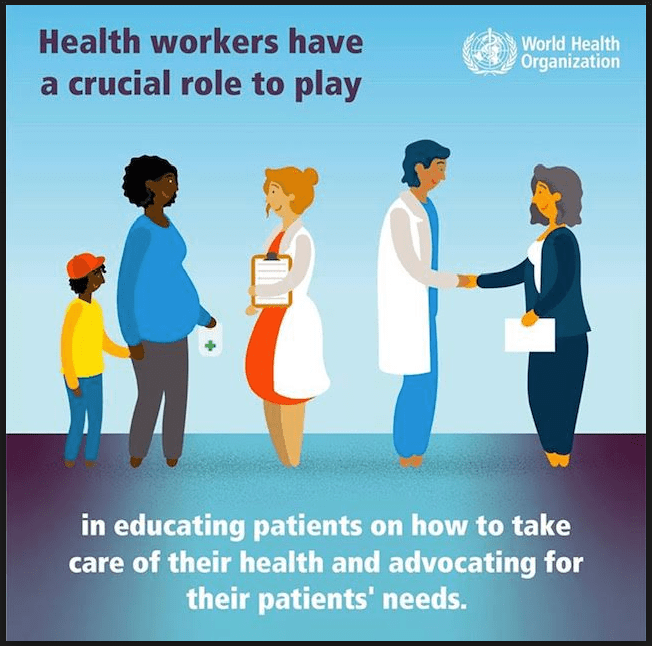
Healthcare workers are of the utmost importance here in the United States as well as around the globe. Healthcare workers include every single person in the health system who delivers care either directly or on an indirect basis. Those who fall under the realm of healthcare workers would include physicians, nurses, physical therapists, patient care technicians, nursing assistants, physicians assistants, and other types of clinicians.

Why are healthcare workers so important? They are crucial for a number of compelling reasons. For one, they serve as patient advocates. Advocacy, defined as the earnest promotion of a cause, is an activity that healthcare workers routinely perform. Clinicians who render patient care regularly advocate for their patients to ensure that all of their needs regarding health are met in a timely manner. Effective advocacy requires a set of soft skills in addition to a degree of social finesse.

In addition, healthcare workers are crucial since they provide education to patients, families, communities and entire populations. Healthcare workers educate people on how to prevent health problems. They teach people how to properly manage disease processes, too. It is essential that patients receive education on proper disease management since dealing with chronic illness in the right manner can ward off deadly complications.

Moreover, healthcare workers are very significant because they deliver the ongoing care, assessment and observation that makes the ultimate difference in the outcomes of patients. In fact, competent healthcare workers are quite possibly the most vital elements in the recovery or stability of a patient’s health status (Stevens, 2009). In essence, healthcare workers provide patient care and keenly observe for changes in condition.

Finally, healthcare workers are important due to the therapeutic relationships they establish with patients. Healthcare workers do things to build relationships with clients that are cemented by trust, rapport, warmth, caring, compassion, human connection and honesty. These elements help patients feel confident and reassured regarding the care they are receiving. Patients will be more likely to care about their health statuses when they perceive that their health workers care.

Again, why are healthcare workers so crucial? They are important because they engage in patient advocacy. They are important since they provide lifesaving patient education. They are important because they deliver care and simultaneously observe for changes in patients’ conditions. They are important because they develop therapeutic relationships with patients that demonstrate caring, warmth and the ultimate level of compassion.

Become a healthcare worker in just a couple of weeks at Legacy Healthcare Careers! People in the Dallas /Fort Worth area of Texas can call (682)626-5266 to get started and be on their way to an exciting healthcare career! Train to become a nursing assistant in two weeks at Legacy Healthcare Careers, a small vocational school located in the DFW area suburb of Richland Hills, Texas. Job placement assistance is available.

RESOURCES

Community Tool Box. (2018). Overview: Getting an Advocacy Campaign off the Ground. Retrieved April 8, 2019, from https://ctb.ku.edu/en/table-of-contents/advocacy/advocacy-principles/overview/main

Stevens, A. (2009, June). What Role Do Healthcare Workers Play in Determining Quality Care? Retrieved April 8, 2019, from http://blog.sunbeltstaffing.com/medical-ethics/what-role-do-healthcare-workers-play-in-determining-quality-care/

Healthcare Workplace Spotlight: It’s All About How People Feel Around You

woman sitting on black chair near brown table
Photo by rawpixel.com on Pexels.com

Here is a harsh reality of workplace politics that some people have not quite grasped: regardless of how well we are able to perform the technical and procedural aspects of our job duties, most employees will never get too far at work if people do not feel comfortable around them. Yes, the way people feel around us is very important. Some further elaboration on this phenomenon is needed, so here we go…

Many workers are amazing at the hands-on, technical aspects of their jobs. For instance, a nurse named Selma has approximately 10 years of experience in various areas. She is highly intelligent and has a masters degree in nursing. Selma has worked in a variety of higher acuity nursing specialties including interventional radiology, critical care, post anesthesia recovery, same day surgery, inpatient dialysis, and the emergency room.

Selma is proficient in a large number of technical and procedural hands-on skills that many other nurses have not fully mastered. For example, she is an expert at operating ventilators. She is also an expert at starting intravenous lines, accessing ports, running bedside hemodialysis machines, managing multiple IV drips, applying wound vac appliances, and performing comprehensive head-to-toe assessments of patients.

However, something is not quite right with Selma. She has had 19 jobs in her 10 year career as a nurse. Patients and families complain that she is not expressive or warm and that her bedside manner is cold. Coworkers would say she is very smart, but brutally honest and hard to be around for expended periods of time. Selma believes she does her work well, so she does not understand why she never manages to keep a job for long.

On the other hand, another nurse named Mamie also has 10 years of experience in a number of different areas. Mamie is an RN with an associate degree from a trade school and experience in lower acuity nursing specialties such as long term care, hospice, post acute rehabilitation, home health, private duty, doctors offices and seasonal flu shot clinics. Mamie has been at her current job at a nursing home for the past seven years.

Mamie does not have most of the hands-on technical skills that Selma possesses. Mamie does not know how to operate ventilators or access ports, and she is not terribly good at starting intravenous lines or managing IV pumps. While Mamie can complete patient assessments, she has never touched a dialysis machine. While Mamie knows how to apply wound vac appliances, she surely would not call herself an expert at this skill.

However, Mamie is beloved at work due to her cheerful personality and ability to make people feel good about themselves in her presence. She always offers assistance and has great interpersonal skills. After five years of dedicated work as a floor nurse and weekend supervisor at the nursing home where she is employed, she was promoted into the nursing administration department to serve as the facility director of nurses.

What is the difference between Selma and Mamie? Even though Mamie may be far less skilled in the hands-on aspects of nursing, her social skills are impressive. In other words, Mamie has mastered the art of causing people to feel comfortable around her. Mamie is aware that people do not care what a person knows until they know that the same person cares about them. Meanwhile, Selma has not yet figured this out.

The moral of the story is this: our time, interactions, encounters and experiences at the workplace will be made more pleasant and easier if people feel a sense of positivity and optimism in our presence. The initial step to induce comfort in people and put them at ease is to behave in a gracious and kindly manner toward everyone, regardless of who they are. After all, the way people feel around us is very important. Remember that.

Healthcare Workplace Spotlight: the Importance of Personal Hygiene

man person cute young
Photo by Pixabay on Pexels.com

For starters, personal hygiene is defined as the various ways in which an individual provides care to his or her body. Personal hygiene is of the utmost importance for everyone in society, but this rings especially true for those who work in the medical field and healthcare industry. In fact, personal hygiene is so important in the healthcare field that it can mean the difference between life and death.

Why is personal hygiene so important? The human body can be an ideal place for many disease-causing microbes and germs to flourish and multiply. These microbes can result in illness for a person who does not practice good personal hygiene habits. In addition, the microbes can make the other people in the life of the unclean person extremely sick due to the fact that germs that cause disease are spread by way of direct contact.

What are some examples of poor personal hygiene habits for healthcare workers and others? Examples include wearing unwashed clothing and uniforms, not showering or bathing regularly, not brushing one’s own teeth twice per day, not routinely washing one’s hands, and failing to cover the mouth when coughing or sneezing. Unclean clothes, bodies, mouths and hands are all able to spread germs and make others ill.

For those who provide direct care to clients and patients, personal hygiene is so crucial that adherence to good cleanliness habits can mean the difference between life and death. For instance, unclean clothing contains dead skin cells and germs. A nurse aide who wears unclean scrubs to her workplace can spread germs to an elderly patient with a compromised immune system. The patient may develop an infection and die.

Certain types of patients and clients are more prone to contracting illness than others. These patients include the elderly, the very young, the unvaccinated, and those with reduced immunity due to acquired immunodeficiency virus (AIDS) or taking medications that suppress the body’s immune response. People with autoimmune diseases and those who have had organ transplantation often take drugs that lower the body’s immunity.

So, what are some examples of good personal hygiene habits that healthcare workers and others should practice? Some examples include taking daily showers or baths, brushing the teeth twice a day, washing the hands after using the toilet and before giving care or handling food items, wearing clothing that has been washed, ensuring one’s hair is clean, and covering the mouth when coughing or sneezing.

Good personal hygiene habits reduce microbial counts on a person’s skin and in the oral cavity, thereby minimizing chances of spreading germs that cause disease. Clean clothing does not harbor the germs that are found on unwashed clothes. Also, covering the mouth during a cough or sneeze keeps airborne and droplet germs from getting into the air, thereby preventing others in the immediate area from breathing them in.

Personal hygiene starts with at the individual level. It is up to the individual to do what he possibly can to protect himself, his family, the community, and the public as a whole. Good personal hygiene habits protect individuals, families, communities and the general public by reducing the number of disease-causing germs on peoples’ bodies. Personal hygiene is a health and safety issue. Remember that.

RESOURCES

Australian Government Department of Health. (November 2010). Good Personal Hygiene. Retrieved March 28, 2019, from http://www.health.gov.au/internet/publications/ publishing.nsf/Content/ohp-enhealth-manual-atsi-cnt-l~ohp-enhealth-manual-atsi-cnt-l-ch3~ohp-enhealth-manual-atsi-cnt-l-ch3.7

Healthcare Workplace Spotlight: Personal Care Group Homes

woman cleaning the floor near man sitting on sofa reading a book
Photo by Murilo Folgosi on Pexels.com

Entry-level healthcare workers can secure employment at a variety of facilities that offer direct care services, including group homes. A personal care group home, also referred to as a residential care group home, is a private house within a residential community that is staffed with direct care personnel who provide around-the-clock assistance with activities of daily living to small groups of four or more adult clients who live there.

Personal care group homes are generally set up to replicate homelike atmospheres that appeal to clients and families who prefer cozier environments and more personalized services than those offered by large corporate-owned nursing homes and franchise chain assisted living facilities. Instead of living with 120 other nursing home residents, a client at a personal care group home would have anywhere from three to nine housemates.

Most personal care group homes provide services such as meal preparation, laundry, transportation, housekeeping, medication administration, housecleaning and custodial care services. Custodial care is defined as non-medical direct assistance with activities of daily living such as showering, dressing, eating, grooming, toileting and mobility. Entry-level direct care workers who staff these group homes provide help with custodial care.

It is normal for personal care group homes cater to specific subgroups of clients. For instance, some group homes are only occupied by clients who are adults with intellectual and developmental disabilities, whereas other homes have indigent clients who receive Medicaid. Still, some personal care group homes only accept financially secure elderly clients who are privately paying for their private or semi-private rooms with cash.

Most of the individuals who provide the direct custodial care to clients at personal care group homes are referred to as direct care workers. To become a direct care worker, a prospective candidate should have a high school diploma or GED, as well as valid state certification as a certified nursing assistant (CNA) or home health aide (HHA).

Even though it is possible to obtain a job as a direct care worker without a high school education or CNA certification, the rate of pay for this position will almost always be substantially lower without the aforementioned credentials. Therefore, it is advisable that entry-level healthcare workers obtain certification as a CNA prior to applying for positions as direct care members of staff at personal care group homes.

Call (682)626-5266 to enroll in two-week nurse aide (CNA) training classes at Legacy Healthcare Careers, a small vocational school in the Fort Worth area suburb of Richland Hills, Texas.