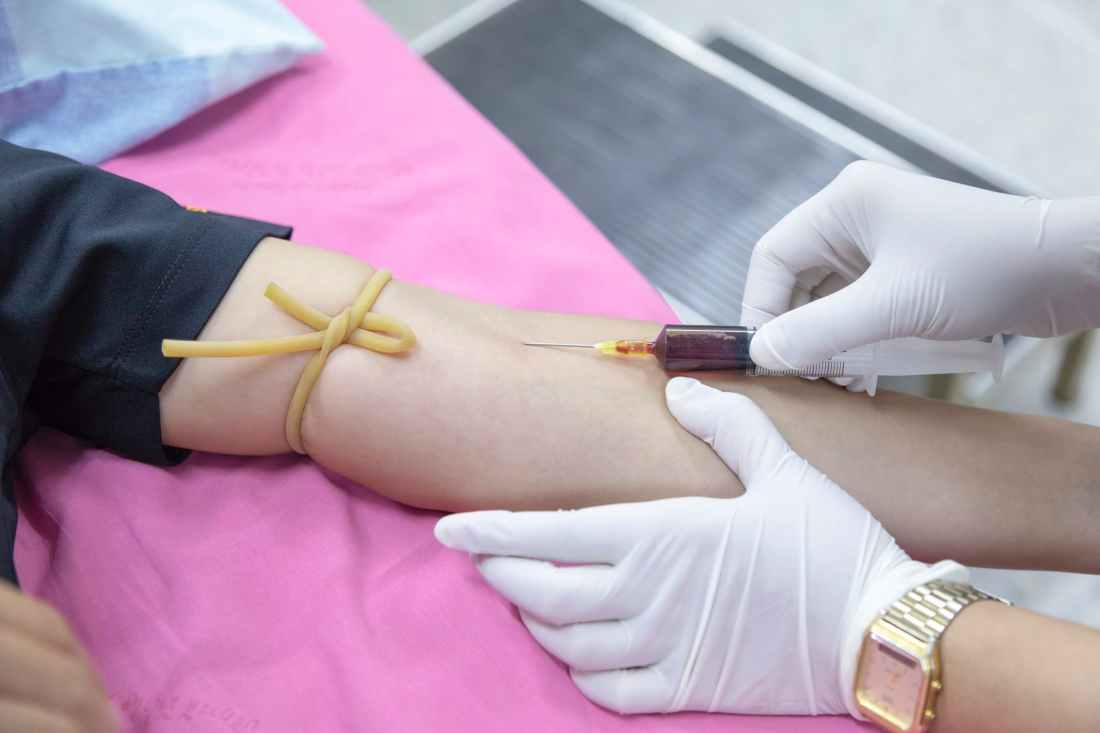
Healthcare Career Spotlight: the Phlebotomy Technician, a.k.a. Phlebotomist

white plastic syringe
Photo by Amornthep Srina on Pexels.com

A phlebotomy technician, also referred to as a phlebotomist at times, is an allied healthcare specialist whose primary responsibilities include blood withdrawal, specimen collection and finger sticks. Phlebotomy technicians have received occupational training to ensure they have the knowledge and psychomotor skills to draw blood and obtain specimens from patients with a certain degree of accuracy.

Phlebotomy technicians are immensely important members of the healthcare team because without their hands-on procedural skills, many physicians and other types of healthcare providers would not be able to accurately diagnose and treat their patients in a timely manner. The main duty of the phlebotomy technician is to obtain patients’ blood specimens by way of venipuncture and micro techniques.

In the healthcare field, venipuncture is a term that refers to the puncture of a vein, usually to withdraw a sample of blood for testing purposes. Phlebotomy technicians perform venipuncture on a routine basis to draw blood from patients. Phlebotomy technicians also obtain blood specimens by way of micro techniques such as sticking patients’ fingers with lancet devices and using pipettes.

Since phlebotomy involves extensive contact with people, phlebotomy technicians must be comfortable interacting with patients, coworkers, vendors and other individuals. The role of a phlebotomy technician requires effective communication skills as well as the ability to establish rapport and trust with patients. Phlebotomy technicians regularly interview patients prior to drawing their blood. They might also answer phone calls.

The healthcare specialty of phlebotomy has grown by leaps and bounds over the past few decades. Thus, the role of the phlebotomy technician has also grown to include an array of tasks that are clerical in nature such as light data entry, verification of patients’ personal health information, creating labels, filling in information on handwritten requisition forms, obtaining signatures, sending faxes, scanning documents and reordering supplies.

Depending on the place of employment, some phlebotomy technicians must also perform duties that involve financial matters. Some of these duties may include gathering info on health insurance payer sources, collecting payments in exchange for rendered services, printing receipts, notifying patients of their exact co-payment and/or coinsurance amounts, and making copies of documents such as insurance cards.

Phlebotomy technicians are employed mostly in workplaces such as acute care hospitals, medical and diagnostic laboratories, blood bank donor collection centers, clinics, and physicians’ offices. After accruing several years of experience, some phlebotomists secure employment as phlebotomy instructors at vocational schools, community colleges and private for-profit academies. Most employers seek phlebotomists who have attained professional certification.

Patient safety is of the essence, so phlebotomy technicians must strictly adhere to all safety precautions in order to prevent the transmission of infectious diseases such as hepatitis C, AIDS, and so forth. Since quality assurance, safety and accuracy must be upheld in the healthcare specialty of phlebotomy, stringent professional behavior requirements and standards of practice exist for phlebotomy technicians.

Persons interested in entering the field must have a high school diploma or G.E.D. before completing a vocational training program in phlebotomy that leads to a postsecondary certificate or diploma. Phlebotomy training programs are offered at many types of postsecondary institutions such as community colleges, state universities, vocational schools, and private for-profit academies. These programs vary in length, but most are only a few months long.

Since the majority of employers prefer to hire phlebotomists who have professional certification, many entities will certify the phlebotomy technician’s body of knowledge. The National Healthcareer Association, the American Society for Clinical Pathology, the National Phlebotomy Association, the Association of Phlebotomy Technicians, and the American Medical Certification Association are five entities that offer professional certification to phlebotomy technicians.

Phlebotomy technicians are in high demand for the near future. Job openings have increased noticeably because many healthcare workplaces need to hire phlebotomy technicians for all three shifts to ensure 24-hour staffing coverage. Employment of phlebotomy technicians is projected to increase by 27 percent through the year 2022, much faster than the average for all occupations.

Government Shutdown 2019: How Does It Impact Healthcare?

clinic doctor health hospital
Photo by Pixabay on Pexels.com

Multiple segments of the United States federal government have been shut down since December 22, 2018 and, as of the time of this writing, it is now officially regarded as the lengthiest shutdown in the nation’s history. In fact, this particular government shutdown has been going on for 30+ days with no foreseeable end in sight due to partisanship and sharp divisions with regards to political viewpoints.

Meanwhile, the masses of furloughed government workers must anxiously contend with the uncertainty of what the near future will bring. In addition, while many government workers have not been furloughed, they are reporting to their workplaces without pay. Since a large number of these men and women exist from paycheck to paycheck, many of their families will soon experience financial hardships and a lack of money to pay household bills.

Even though the current partial government shutdown was not directly related to or a direct result of healthcare policies or programs, it does have a notable impact on several aspects of the health system in the United States. The primary goal of this nonpartisan, nonpolitical piece is to bring up a handful of the federal entities that are presently being affected by the 2019 government shutdown.

Federal entities such as the Indian Health Service, the Food and Drug Administration and the Environmental Protection Agency all possess ties to the US healthcare industry, albeit in very different ways.

The Indian Health Service

The Indian Health Service, abbreviated IHS, is a governmental entity that operates within the US Department of Health and Human Services while obtaining its funding entirely via the Department of the Interior. The IHS delivers hands-on healthcare and implements public health service initiatives for descendants of federally recognized Native American tribal people, as well as Native Alaskan people.

Clinics operated by the IHS are still open and treating patients. However, the healthcare workers who staff these clinics currently report to work without pay. The unpaid federal employees who are working without pay include physicians, nurses, midlevel healthcare providers (physician assistants, nurse practitioners, midwives, clinical nurse specialists), medical office assistants, and other staffers who have been deemed ‘essential personnel.’

Furthermore, the IHS has temporarily halted all activities that have been regarded as nonessential. For instance, the IHS preventative health clinics operated by the Office of Urban Indian Health Programs are upheld by grants that have been suspended until the government shutdown comes to an end. In addition, monetary grants that sustain various tribal health programs have also been placed on hold until further notice.

The Food and Drug Administration

The Food and Drug Administration, referred to as the FDA for short, is another federal agency with close ties to the US healthcare industry. Even though the FDA falls under the large sphere of of the US Department of Health and Human Services, this very important agency receives the entirety of its operational funding through the US Department of Agriculture.

Here’s the problem…the US Department of Agriculture has not yet been funded as a result of the government shutdown. Consequently, many operational divisions within the FDA are now not funded. Thus, nearly half of the individuals who work for the FDA have been furloughed. The FDA is responsible for carrying out multiple tasks that involve health and safety such as routine food inspections, pharmaceutical drug approvals, and regulation of tobacco products and cosmetics.

The Environmental Protection Agency

The Environmental Protection Agency, known as the EPA, is an independent agency of the federal government entrusted with a number of important responsibilities and programs that directly tie into public health and safety. Some of these responsibilities include ensuring the drinking water that citizens consume is safe, regulating insecticides, and managing the disposal of hazardous waste products.

The EPA is presently unfunded due to the government shutdown. As a result, an incredibly tiny skeleton crew of about 700 EPA employees have been reporting to work without pay. Meanwhile, more than 13,000 EPA workers have been furloughed due to the lack of funding. Because of the vast number of furloughed EPA employees, the health and safety activities usually carried out by them are not being completed at full capacity.


Healthcare Career Spotlight: the Personal Care Assistant

woman holding hands
Photo by Pixabay on Pexels.com

Personal care assistants, also known as direct care workers, personal care attendants, direct care staff, home care aides, paid caregivers, healthcare assistants, carers, home health or personal care aides, are allied healthcare workers who provide hands-on assistance to clients who are not able to help themselves.

The clients of personal care assistants are often unable to help themselves due to a wide variety of reasons that might include lengthy illness, cognitive or mental impairment, acute injury, physical disability, advanced age, weakness or fragility. Other clients may be rendered unable to care for themselves due to intellectual and developmental disabilities, limited mobility, paralysis, debility or congenital handicaps.

Personal care assistants typically work in the home setting and assist their clients with various activities of daily living, such as showering, bathing, toileting, feeding, grooming, and taking medications. Personal care assistants may also be responsible for other tasks such as meal preparation, light housekeeping duties, and companionship.

In addition to the aforementioned tasks, personal care assistants might also assist their clients in the instrumental activities of daily living that help ensure households run smoothly. These instrumental activities can include the provision or arrangement of transportation, physicians’ appointments, ensuring clients take their medications, and other duties. Personal care assistants often serve as companions to their clients.

Most personal care assistants are employed by home care agencies to report to the homes of clients, while some personal care assistants are hired directly into private duty cases by clients or family members of the client. Likewise, some personal care assistants are employed by personal care group homes, assisted living facilities and independent living complexes where they often report directly or indirectly to a licensed nurse.

The typical personal care assistant tends to work long hours. Their role can be physically demanding on occasion due to lifting requirements and extended periods of time spent in a standing position. Nonetheless, this healthcare career can be very fulfilling due to the profound sense of purpose many workers derive after helping people who cannot help themselves. Providing companionship to clients can be invigorating.

The majority of personal care assistants have earned a minimum of a high school diploma or general education diploma (GED) certificate, but this level of education is not required by all employers. Sometimes the training for the personal care assistant role is done on the job by licensed nurses or other assistants with more experience.

The on-the-job training typically provided to personal care assistants is comprised of safety information, response to common emergency issues, and other duties specific to the home or employer. Additional training topics may include proper body mechanics, self-care techniques, and ways to deal with difficult client behaviors.

A number of states may require personal care assistants to complete more formalized occupational training from an adult education center, vocational school, nurse aide training academy, community college program or other home health entity. Also, certification is mandated for all personal care assistants who work for companies that receive reimbursements and payments from the Medicare or Medicaid programs.

A healthcare career as a personal care assistant opens the doors to wonderful attributes such as steady income and job security. The Baby Boomer generation is aging and becoming elderly; therefore, personal care assistant job openings will increase at a speedy pace in the foreseeable future. Personal care assistant job openings are projected to increase by 69 percent, much faster than the average of all other occupations.


Positive Thoughts for Students Who Think They Cannot Do It (Part Two)

achievement adult agreement arms
Photo by rawpixel.com on Pexels.com

Negativity is powerful enough to hold us back if we pay too much attention to it. In fact, negativity has the damaging power to crush some peoples’ hopes, dreams, goals and plans for brighter futures. With all of the negative vibes and poor normative cues that flood our day to day lives, it can be a monumental fight for even the strongest-willed individual to genuinely believe in one’s abilities to accomplish goals.

Nonetheless, much of the negativity comes from within. That pesky internal voice in our neural network of deepest thoughts shouts out to us louder than any other person ever could. However, positivity can cancel out the negativity. Having a strong belief in one’s own ability to get things done makes the difference. A positive outlook is of the essence because you must believe in yourself in order for others to believe in you.

In essence, take some time out of each day to nurture your soul with at least one positive affirmation. You should never be made to feel that you do not deserve success. Actually, you deserve to live the kind of life you want to live just as long as you are willing to devote the effort to achieve this. People should not feel that they are somehow faulty or undeserving of having the markers of a worthy existence. You are worth it!

The overriding message is to keep on trucking until you make enough progress to obtain the sort of changes you want to see. We can have virtually anything we want, and common sense prescribes that you will eventually get what you want. Conversely, it must be emphasized that you must change your inner thoughts in order to change your life. In other words, think positively. Talk positively. Live your life with positivity.

POSITIVE THOUGHT NUMBER FOUR: “I am a worthy person who has something good to offer.”

You, as a uniquely special human being, are worthy of giving and receiving. You have something decidedly special to offer to humankind, but only you know what it may be. You are worthy of receiving goodness, success, and all the fruits that come with the territory of these attributes. Realize that you are worthy and wholly deserving of the existence that has been bestowed upon you.

POSITIVE THOUGHT NUMBER FIVE: “I am thankful for all that I currently have in my life.”

Have an attitude of gratitude. You may think you presently have it bad, but others out there assuredly have it a hundred times worse. You might be complaining about your old shoes while someone out there has no feet. You might be complaining about your underachieving kids while parents in a developing country are grieving the loss of a young child that they could not afford to feed.

If all your basic needs of food and shelter are being met, be thankful and grateful for what you’ve got. Have some gratitude. Focus on what you currently have, as well as the things you would like to work toward. It is easier to focus on what you have rather than what you do not have.


Life is Less About What Happens to Us and More About How We Respond to What Happens

screenshot 2019-01-16 at 8.07.59 am

It is assured that some readers have heard the popular adage, “life is ten percent of what happens to us and ninety percent of how we react to it all.” Well, the aforementioned saying carries a great deal of weight in all situations we face. The reality is that our outlook is everything. The ways we look at and respond to life’s various situations are what forms our views, beliefs and so much more.

Struggles and uphill battles will challenge us throughout our lives. Nonetheless, we have the power in our hands to perceive these struggles in a certain way. We can view these struggles as learning opportunities that strengthen our character. We can perceive life’s various struggles as challenges that can be overcome. Unfortunately, we can also choose to perceive any struggle as something we have absolutely no control over.

Believe it or not, but the power to start living a better life is totally in your hands. You do not need to be a passive spectator who simply allows things to happen to you without any control in the matter. You do not need to be powerless or helpless. In reality, you do possess more power than you will ever realize.

Every single person can decide to live the life he or she truly desires, regardless of how difficult times might become. It is all a matter of perception and mentality. If you perceive that you have the power to change your circumstances, you are more likely to take the steps to make this happen. On the other hand, those who perceive that they are helpless will continue to be steamrolled by life’s routine problems.

In other words, having an optimistic mentality is very helpful in life. Learn to seize the opportunity in every situation, good or bad. Only you can hinder yourself from attaining success in life. No one else is stopping you from living the type of life you really want. Rough situations such as domestic violence, lack of money and unsupportive people are small molehills that we can simply crush before we reach our awesome destinations.

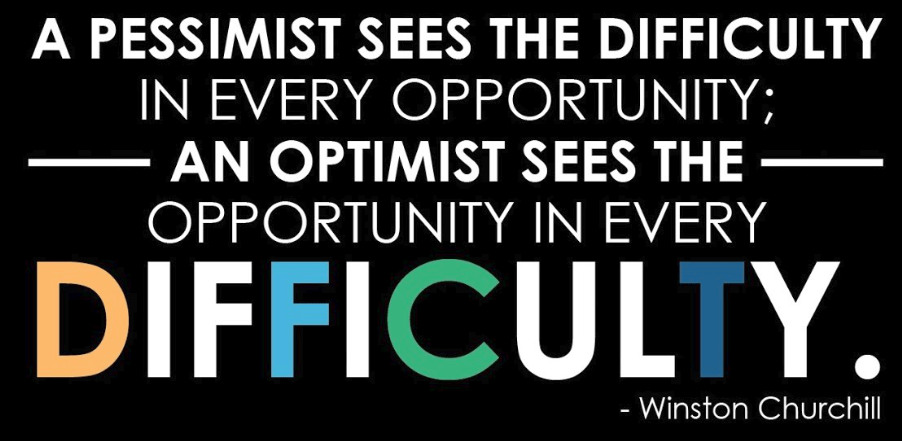
Winston Churchill once said, “The pessimist sees the difficulty in every opportunity; the optimist sees the opportunity in every difficulty.” Differently worded, an optimistic person and a negative person experience the exact same event, but interpret it differently. The pessimist sees nothing but obstacles and problems while the optimist sees mostly opportunities and positive occasions.

For instance, going back to school is an event that tends to be approached differently by optimists and pessimists. The optimist has a perpetually positive outlook and says to herself, “I can do this.” School is not too hard for the true optimist. If they struggle in school or do not fully understand the material, they pull their resources together. They ask teachers and classmates for help. They seek to understand the material on their own time. Optimists find opportunities to conquer challenges.

Pessimists might not be enjoying their current state of affairs in life, but they also give up too quickly due to negativity. School is too hard for them because they perceive it in that manner. School is too expensive. School is pointless. You see the common thread…the true pessimist sees the difficulties in every situation and makes excuses to avoid taking the steps to improve his situation in life.

The moral of this piece is to change your outlook. Why should you change your outlook? It is because your life can improve dramatically if you alter the way you look at the things that occur in life. Once you start approaching various challenges in life with a more optimistic viewpoint, things will change for the better. To change your life, you must first change your thoughts. It really is your choice.

Do you have the optimism to change your life? Start by changing your career! The 7-day CNA program at Legacy Healthcare Careers is designed to deliver state-approved training. The 7-day CNA program trains students to become a nursing assistant in approximately one week. Call (682)626-5266 to enroll at Legacy Healthcare Careers CNA School today. Classes start soon.

Additionally, Legacy Healthcare Careers will be offering certified medication aide training classes to prospective students in the Dallas-Fort Worth metro area who are presently working as CNAs or direct care staff workers. Call (682)626-5266 to obtain more details on the upcoming medication aide training program.

Positive Thoughts for Students Who Think They Cannot Do It (Part One)

man in black and white polo shirt beside writing board
Photo by Pixabay on Pexels.com

Many prospective students who want to return to school are held back by an intricate framework of negative thoughts about themselves and their capabilities. In too many instances, these negative thoughts probably evolved due to prior experiences in a school setting that may have been embarrassing, low-quality, or reminiscent of failure.

Sometimes these persistently negative thoughts have arisen due to pessimistic statements made by extended family members, spouses, partners, friends or some other unsupportive individual in their lives. It is even more unfortunate when the seeds of doubt are planted by the very same people in our lives that we seemingly expect to care about us the most.

With all of the negativity in our lives, sometimes it is an uphill battle to truly believe in our abilities to accomplish our goals. The mental voice in our framework of inner thoughts tends to speak to us more loudly than any other person. Nonetheless, believing in oneself and insisting that our goals can be accomplished is always a positive thing.

We should never feel that we do not deserve success for ourselves and those we love. We should never feel that we do not deserve to enjoy the type of life that we envision ourselves living. Keep plugging away at what you want, and common sense dictates that eventually you will obtain what you want. However, you must change your thoughts in order to change your life.

POSITIVE THOUGHT NUMBER ONE: “I am proud of all the things I have accomplished up to this point.”

All accomplishments are noteworthy and should be celebrated, regardless of how small or petty they may seem at the present time. These achievements may include parenthood, child rearing, escaping from an abusive situation, accrual of five years of service on the job, and so forth. Each life experience contributes to the complex person we are today. In other words, do not be afraid to take pride in every accomplishment regardless of how insignificant it may seem.

POSITIVE THOUGHT NUMBER TWO: “I truly believe in the individual that I want to become.”

In order to create a better future, a person must first formulate a clear mental picture of a brighter future so he or she can constantly envision it. This mental picture may or may not entail a person with a strong degree of self-confidence who has stability and an awesome career that pays enough to support one’s immediate family. Whatever the case, a person needs to fully believe in the individual that he or she aspires to become.

POSITIVE THOUGHT NUMBER THREE: “I am deserving of the dreams that I have for myself and my family.”

The people who accomplish their goals and dreams generally have some character traits in common such as tenacity, grit, perseverance, confidence and assertiveness. They tend to believe that they actually deserve to succeed, so they go after their goals with an eagerness that often goes unrivaled. Once you start to believe that you are seriously deserving of the dreams that you have for you and your family, the likelihood of turning those dreams into reality increases by leaps and bounds.

Do you want to make positive changes in your life and career prospects? The 7-day CNA program at Legacy Healthcare Careers provides state-approved training that trains you to become a nursing assistant in approximately one week. Call (682)626-5266 to enroll now. Classes start soon.

Also, Legacy Healthcare Careers intends to offer certified medication aide training classes to prospective students in the Dallas-Fort Worth metro area who are already employed as CNAs or direct care staff workers. Call (682)626-5266 for more details.

Reasons to Consider a Healthcare Career (Part Six)

screenshot 2019-01-10 at 8.34.50 am

NOTE: This piece is the sixth and final post in a comprehensive six-part essay that attempts to bring light to some of the predominant reasons a person should seriously think about carving out a career pathway in the booming healthcare industry. Click here to read the first essayClick here to read the second part, and click here for part three. Meanwhile, click here for parts four and five.

The healthcare industry is absolutely booming in many geographical regions across the country. Therefore, it would make common sense that this large field would be saturated with countless job opportunities, as well as the potential for measurable growth in the long term. However, an individual needs to have enough tenacity and persistent follow-through abilities in order to enter the ranks of the healthcare industry.

Nonetheless, plenty of perks and positive aspects await the people who possess the perseverance to pursue healthcare as a career choice. A number of truly compelling reasons exist for traveling down a career pathway in the healthcare field. Parts one, two, three, four and five of this six-part series listed plenty of reasons to obtain a healthcare occupation. Keep reading to find out added info regarding even more of these reasons.

REASON 16: Entry-level healthcare jobs offer superb chances for career advancement.

An individual who enters the healthcare industry as a certified nursing assistant (CNA) can make the choice to attain additional education and occupational training to advance his or her career. A CNA can become either a medication aide (also known as a medication technician), patient care technician, phlebotomy technician, or certified medical assistant.

CNAs can also keep climbing the educational ladder to become a licensed practical /vocational nurse (LPN /LVN), registered nurse (RN), dialysis technician, medical technologist, medical lab technician, certified pharmacy technician, cardiopulmonary resuscitation (CPR) instructor, or any number of other interesting roles in the vast healthcare sector.

People in healthcare also qualify for vertical and lateral promotions. For instance, an astute nurse aide can be promoted to a staffing coordinator or central supply manager at many skilled nursing facilities. After all, a sizable number of healthcare facilities prefer to promote good employees rather than recruit talented people externally. When it comes to career advancement in the healthcare field, the sky is truly the limit!

REASON 17: Healthcare is an industry that is expanding at a fast pace.

The healthcare industry is rapidly expanding due to a number of factors, including the large wave of older persons that belong to the Baby Boomer generation who are aging and requiring health services in ever-increasing numbers. Also, the number of people in the general population is increasing in many geographical areas due to birth rates, relocation patterns, and so forth.

All of the aforementioned reasons result in grand openings and /or expansion projects of hospitals and other types of healthcare centers to meet the increased demand from potential patients and clients. If the population in a particular city is increasing at a fast pace, healthcare facilities need to be built to accommodate all the potential people who will eventually seek care.

REASON 18: A healthcare career can personally fulfill employees.

Many healthcare workers and providers find that a career in the healthcare field is personally fulfilling. When working in some healthcare roles, there can often be very intimate involvement in some of life’s most transforming moments. Some of these moments include childbirth, impending death, and everything in between. For some healthcare workers, the fulfillment they receive is invigorating in the best way possible.

Call the Legacy Healthcare Careers CNA School at (682)626-5266 to ask about enrolling in either the 7-day CNA program, the 2-week CNA class, or the 3-week CNA course in the Dallas /Fort Worth area of Texas. It is your choice. In addition, feel free to visit the school’s informative website at www.LegacyHealthcareCareers.com to find out more information about the school’s affordable nurse aide training programs. Jump-start your legacy!

Reasons to Consider a Healthcare Career (Part Five)

adult biology chemical chemist
Photo by Pixabay on Pexels.com

NOTE: This piece is the fifth in a six-part essay that aims to further explore many of the key reasons to seriously think about paving a career pathway in the healthcare field. Click here to read the first blog post in this seriesClick here to read part two, and click right here to read part three. Finally, click here for parts four and sixEnjoy!

There’s a whole host of undeniably great reasons to fit a healthcare occupation into one’s future career aspirations. Parts onetwo, three and four of this six-part series of postings brought some desperately needed light upon a number of compelling reasons to consider a dynamic career in the healthcare sector.

Moreover, there’s more great news. This is due to the fact that some additional reasons exist for entering the ranks of the burgeoning healthcare industry. Continue reading to find out even more information about the myriad of wonderful reasons to have a healthcare career in the 21st century. This career information may or may not transform someone’s professional and personal life for the better.

REASON THIRTEEN: Healthcare workers tend to have comfortable, nice workplace environments.

The working environments of most healthcare workers are rather desirable places of employment due to cleanliness and image grooming for the public. The majority of people who work in the healthcare field report to places of employment that are cleaned on a routine basis, ergonomically designed for comfort, climate-controlled and welcoming to employees, patients, vendors and visitors.

A nice workplace environment is something a healthcare worker should be extremely thankful and grateful for. After all, think about the masses of hard-working ditch diggers, construction workers, mail carriers, long distance truck drivers and farm workers who toil outdoors in the extreme heat, heavy rain, high winds, snow, hail, sleet, freezing conditions, and all types of other inclement weather conditions.

REASON FOURTEEN: Healthcare workers have the opportunity to own a business.

One of the most alluring aspects about becoming a healthcare worker is the opportunity to own one’s business. Most healthcare workers will inevitably work for other people as employees of various companies. However, many individuals in the healthcare industry eventually own and operate their places of business. All it takes is an entrepreneurial spirit and some solid business sense to turn one’s dreams of business ownership into an awesome reality.

Healthcare workers and providers who own their businesses include the countless physicians who own their clinics and private practices, as well as the nurses who own and operate medical supply stores and med spas. Some home health aides and medical assistants utilize their work experience to successfully own and operate private duty personal care agencies. Meanwhile, some pharmacists own consulting firms and/or private pharmacies.

The ultimate appeal of becoming one’s own boss is a magnetic aspect that attracts many new entrants to the healthcare industry. A person could feasibly establish his or her own hours of business operations, run every aspect of the business, purchase or lease office space or a storefront, or even manage some types of businesses from home. In fact, many consulting firms and online businesses are owned and operated directly out of a spare bedroom in the owner’s home.

Even though owning and operating a business can induce anxiety at first, it is a highly popular route to travel. The sheer amount of flexibility and control that comes with owning a business can be mind-blowing. In addition, not every individual is cut out to be someone else’s employee. Some people are actually more appropriate for business ownership due to personality traits that make entrepreneurship a more suitable choice from which to generate a livelihood.

REASON FIFTEEN: Healthcare workers can work virtually anywhere.

Healthcare workers can work in almost any geographic region where health services are needed. After all, infants continue to be born in all 50 states, so the obstetrics profession is in demand in all 50 states. People continue to be terminally ill in all 50 states, so the reality of impending death results in job openings for healthcare workers in the hospice and palliative care sub-specialties.

People need healthcare at all stages in the circle of life from the moment they are born until the day they die. Infants, children, adolescents, young adults, middle aged people and senior citizens will all need care from healthcare workers at various points in their respective lifespans. This translates into an exciting array of employment opportunities in the healthcare sector regardless of one’s geographic location.

Place a telephone call to Legacy Healthcare Careers CNA School at (682)626-5266 to enroll in either the 7-day CNA program, the 2-week CNA class, or the 3-week CNA course in the Dallas /Fort Worth area of Texas. Additionally, feel free to visit the school’s informative website at www.LegacyHealthcareCareers.com to gather more information about the affordable nurse aide training programs. Jump-start your legacy!


Reasons to Consider a Healthcare Career (Part Four)

screenshot 2019-01-06 at 9.32.35 am

NOTE: This piece is the fourth in a six-part essay that seeks to cast some light on the top reasons to think about entering a healthcare career pathway. Click here to read the first essay. Click here to read the second part, and click right here to read part three. Click here for parts five and six.

A number of amazing reasons exist for integrating a healthcare career into one’s future career plans. The overwhelming majority of people cannot lose out by becoming a part of the healthcare industry, regardless of their current skill level or prior educational attainment. Inexperienced entry-level workers are very much welcomed in healthcare, and so are the highly experienced career changers.

Parts one, two, three, five and six and of this six-part essay arguably succeeded at shedding some light on good reasons to think about selecting a career in the healthcare sector. Guess what? There are some additional reasons for joining the ranks of the healthcare sector. Continue reading to find out more about these fantastic reasons to become a healthcare worker in the near future.

REASON 10: The healthcare sector has a refreshing array of variety.

It has been previously said that “variety is the spice of life.” Healthcare contains plenty of variety that keeps things interesting for those who work in this booming industry. The healthcare industry is home to a number of diverse and fulfilling career pathways. There are healthcare careers that involve direct hands-on patient care, managerial duties, scientific research, administration, consultative services, educational instruction, and innovation.

Healthcare workers can work in a multitude of workplace settings. Healthcare workers can be found working in healthcare environments such as acute care hospitals, skilled nursing home facilities, insurance companies, the pharmaceutical industry, jails, prisons, personal care group homes, colleges, the military, schools, and hospice. Healthcare workers also secure employment with the federal government, home health companies, clinics, physicians offices, elementary schools, and infusion centers.

REASON 11: Healthcare sector occupations have good opportunities for career progression.

Career progression, also known as career mobility, is a great process in which workers climb up the different rungs of the economic ladder in order to to earn higher pay and achieve more occupational prestige. For instance, a nursing assistant can go back to school to become a licensed practical nurse (LPN), licensed vocational nurse (LVN), registered nurse (RN) or advanced practice nurse (APN).

A certified pharmacy technician can go to pharmacy school to pursue a lucrative career as a pharmacist, and a physician’s assistant (PA-C) can attend medical school to become a licensed physician who works in any number of great medical specialties. There are many more examples of career progression in the healthcare field.

In addition, the healthcare field has always welcomed entrants who have clear-cut aspirations of advancing their careers. In general, nurse managers love it when a patient care assistant expresses the desire to return to college part-time to become a nurse. Nursing home administrators are often supportive of employees who opt to take additional coursework to become licensed nursing facility administrators.

REASON 12: Healthcare workers play key roles to help clients improve and get better.

Healthcare workers play an integral role in assisting clients to improve their outcomes. Essentially, most types of healthcare workers help clients improve and heal, whether it is through direct patient care or more indirect methods. It is important that patients who enter the healthcare system start feeling better and improving as soon as humanly possible, and healthcare workers use their skills to facilitate these improvements.

Patients progress more optimally when an interdisciplinary team of healthcare workers and providers contribute to their care because each worker brings a different type of expertise to the table. For example, physicians diagnose and treat disease processes while nurses plan the care of their patients. Pharmacists do a number of important things to enhance compliance to medication regimens. Nursing assistants provide direct hands-on care while communicating changes in the patients’ statuses.

This is a gentle reminder that if you are in the Dallas /Fort Worth area of Texas, you can transform your life in only 7 days by training at Legacy Healthcare Careers to become a nursing assistant through our 7-day CNA program. Call Legacy Healthcare Careers CNA School at (682)626-5266 to enroll in either the 7-day CNA program, the 2-week CNA class, or the 3-week CNA class.

You can also visit the school’s website at www.LegacyHealthcareCareers.com to apply online and/or collect additional info on the affordable, high quality nurse aide training programs that are offered. Now is the perfect time to jump-start your legacy…


Reasons to Consider a Healthcare Career (Part Three)

screenshot 2019-01-04 at 8.32.28 am

NOTE: This is the third installment in a six-part series of posts that aims to illuminate some great reasons to seriously think about obtaining a career in the healthcare field. Click here to read part one, and click right here to read part two. Also, click here for parts four, five, and six.

A myriad of solid reasons exist for incorporating a healthcare career into one’s life. Parts one and two of this five-part series brought up multiple compelling reasons to consider a career in the healthcare industry. Continue reading to find out about several more of these awesome justifications for becoming a healthcare worker.

REASON 7: Healthcare workers meet wonderful people on a day to day basis.

Healthcare workers cannot avoid encounters with a wide variety of interesting people. Some of these interesting folks include patients, family members, physicians, nurses, nursing assistants, case managers, clinical social workers, dietary staff, physical therapists, administrators, managers, pharmacists, psychologists, and so many other types of clinicians, healthcare providers and assistive support staff.

Not only do healthcare workers get to meet a variety of great people on a daily basis, but they have the opportunity to learn new pearls of wisdom due to the collective body of knowledge that every single one of these individuals bring to the table. Each person in the healthcare sector can teach valuable lessons that will surely enhance our lives regardless of one’s educational level or occupational status. Thus, interesting people can lead to constantly invigorating shifts at the workplace.

REASON 8: Jobs in the healthcare field are in continual demand.

The healthcare industry is continually expanding; therefore, all the jobs and career pathways related to direct patient care are in demand. Countless employment opportunities exist in the burgeoning healthcare industry. Direct care members of nursing staff such as bedside nurses, nursing assistants, home health aides and patient care technicians are in explosive demand due to the hands-on skills they possess.

For instance, nursing assistants are in astoundingly high demand. The number of employment opportunities for nursing assistants and nurse aides has been projected to increase by approximately 11 percent through 2026, which is faster than the average for all other jobs according to the United States Bureau of Labor Statistics (2018). The projections are glowingly optimistic for the future of healthcare.

REASON 9: There are a whole lot of job opportunities in the healthcare field.

There is an abundance of opportunities for employment in the healthcare industry. A person can simply read the employment section of the local newspaper and see all the job openings for differing types of healthcare workers. On the other hand, those who are more technologically inclined can view the vast number of healthcare job openings on employment websites such as Indeed, Monster and Careerbuilder.

Prospective students who have opted to enter the healthcare industry will soon be able to pick from a large selection of great job opportunities upon successful completion of their education and training. There are opportunities and settings to suit all types of personalities and interests. Some types of healthcare workers can work in hospitals, extended care facilities, clinics, physicians’ offices, personal care group homes, and an array of other types of workplace settings.

Do you really need any other compelling reasons to enter the booming healthcare industry? You can experience a life-changing transformation by entering a new a career pathway as a nursing assistant in as little as one week (7 days) if you make the choice to do so.

Call Legacy Healthcare Careers CNA School at (682)626-5266 to enroll in either the 7-day CNA program, the 2-week CNA class, or the 3-week CNA classes in the Dallas /Fort Worth area of Texas. Or, if you wish, you can feel free to visit the school’s informative website at www.LegacyHealthcareCareers.com to gather more information about the affordable nurse aide training programs. Jump-start your legacy right here and right now…

https://youtu.be/P5BWdNEvSFg